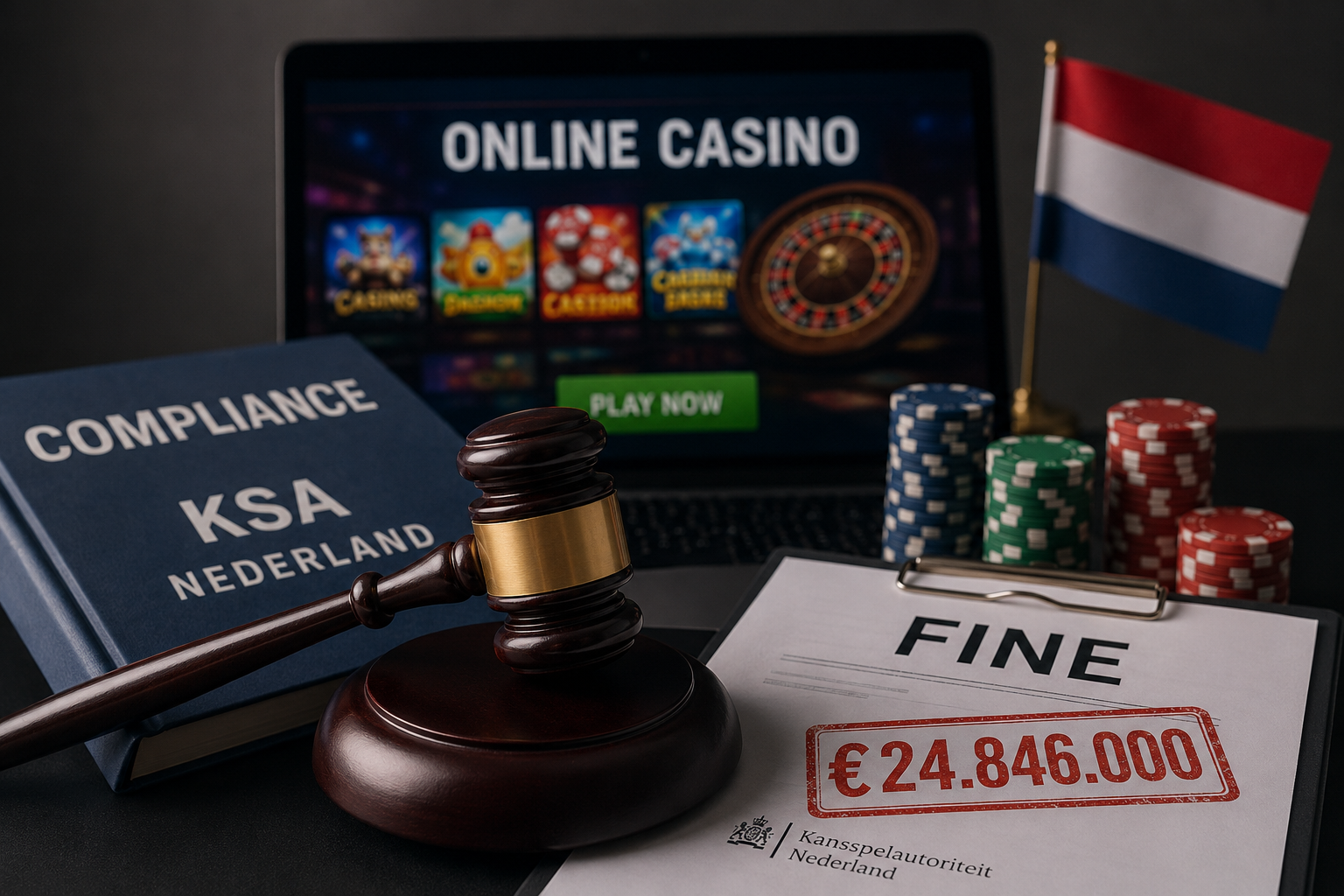
The Kansspelautoriteit (Ksa) closed out a busy stretch of enforcement work in 2026, publishing or confirming seven online gambling fines with a combined value of €36,087,000. That figure sounds straightforward until you look closer.
Only three of the underlying decisions were actually made in 2026. The other four originated in 2025 and reached the public record this year through publication, confirmation or an objection ruling. Treating every case as a fresh 2026 penalty would misrepresent the timeline, and that distinction matters for anyone reporting on Dutch gambling compliance.
The Ksa oversees licensed operators in the Netherlands and takes direct action against companies offering gambling to Dutch players without a licence. Its 2026 enforcement record offers a useful snapshot of where things go wrong, and what both licensed and unlicensed operators keep getting caught on.

Key Points from the 2026 Enforcement Record
- Seven online gambling fines appeared in the Ksa’s 2026 record.
- The combined total reached €36,087,000.
- Four fines targeted illegal operators without a Dutch licence.
- Three fines addressed weak player protection at licensed casinos.
- Only three of the seven decisions were actually issued in 2026.
Seven Fines, One Regulator, Two Very Different Problems
Novatech’s penalty dwarfed everything else on the list, but the pattern across all seven cases splits cleanly into two categories: illegal gambling and duty of care failures.
- Starscream Limited — €4,228,000 — illegal online gambling — decision dated December 2025
- Tulipa Ent Limited (ComeOn) — €750,000 — poor player protection — decision dated December 2025
- Fortaprime SRL — €1,795,000 — illegal online gambling — decision dated February 2026
- Novatech Solutions — €24,846,000 — illegal online gambling — decision dated December 2025
- 711 B.V. — €886,000 — poor player protection — decision dated May 2026
- Chestoption (Vave) — €3,082,000 — illegal online gambling — decision dated June 2026
- LeoVegas Gaming — €500,000 — poor player protection — original decision from October 2025
Warnings, binding instructions and penalty orders aren’t included in this total. Those are enforcement tools, but they don’t count as formal administrative fines.
Illegal Operators Account for Most of the Money
Four unlicensed operators were responsible for €33,951,000 of the total, which shows where the Ksa is putting most of its enforcement weight. The regulator regularly tests whether Dutch users can register, deposit and play on a given site. If they can, and the operator holds no Dutch licence, that’s grounds for action regardless of what licence the company holds elsewhere.
A foreign licence never substitutes for a Dutch one. That single fact trips up more operators than almost anything else on this list.
Novatech: A Record-Breaking €24,846,000 Fine
Novatech’s penalty stands as the largest fine ever handed to an illegal operator by the Ksa, at least at the time it was published. Dutch players could open accounts, deposit funds and gamble through Qbet.com and 55Bet.com without any location-based restriction in place.
Because a standard fine calculation would have looked small next to the money Novatech pulled in from Dutch players, the Ksa used an estimated turnover model instead. Novatech has since filed an objection, so the case isn’t fully closed.
Starscream: €4,228,000 for Three Unlicensed Brands
Starscream ran Rant Casino, Allstarz Casino and Sugar Casino, all accessible to Dutch users without technical blocks. Investigators also flagged missing age verification and active autoplay features, both of which raise player protection concerns on their own.
The company had already received a stop order before this fine landed. The decision, made in December 2025, went unopposed and became final after publication in January 2026.
Chestoption: €3,082,000 Tied to Vave.com
Chestoption targeted Dutch players directly, including through Dutch-language advertising, without holding a Ksa licence. Investigators found no access blocks, no visible age checks, active autoplay or turboplay features, and cryptocurrency payment options, a combination that consistently draws regulatory attention.
An earlier stop order hadn’t resolved the issue, so the Ksa issued this fine in June 2026. An objection window remained open once the case was published.
Fortaprime: €1,795,000 Across Eight Websites
Fortaprime’s illegal offer spanned eight sites, including Amonbet, Supraplay and Kaasino, all reachable by Dutch players without licence checks. The Ksa also noted missing age verification and payment concerns, and found that Dutch influencers had promoted parts of the offer.
The decision came in February 2026, and with no objection filed, it’s now final.
Licensed Operators Weren’t Off the Hook Either
Holding a Dutch licence doesn’t exempt an operator from scrutiny. ComeOn, 711 and LeoVegas all had valid market access but fell short on duty of care, the ongoing obligation to monitor player behaviour and step in when the signs of harm are visible.
711: €886,000 After Failures in Every File Reviewed
The Ksa examined ten player files at 711 and found problems in all ten. Players showed high losses, frequent play across many days, or gambling sessions late at night, patterns that should trigger a closer look under duty of care rules.
According to the regulator, 711 didn’t analyse this behaviour closely enough or respond with suitable action. The violations spanned February 2022 to June 2024, with the fine decision issued in May 2026.
ComeOn: €750,000 for Slow Action on Young Players
ComeOn’s case centred on ten files belonging to young adult players, all of which showed compliance breaches. Some players lost thousands of euros in a short window. Others had deposit limits set far higher than appropriate.
Tulipa Ent Limited, the company operating ComeOn, has filed an objection against the December 2025 decision.
LeoVegas: €500,000 for Weak Responses to Clear Risk Signals
Every player file the Ksa reviewed at LeoVegas showed a duty of care gap. One player deposited and lost tens of thousands of euros in a short period. Another received nothing more than an easily dismissed pop-up as an intervention.
The original decision dates back to October 2025, with a ruling on LeoVegas’s objection following in June 2026.
Why Publication Dates Don’t Always Match Decision Dates
Starscream, ComeOn and Novatech all received their formal decisions on the same day, 16 December 2025. LeoVegas’s original decision goes back even further, to October 2025. All four cases still appeared in the 2026 Ksa overview because of later publication timing or ongoing objection procedures.
That leaves Fortaprime, 711 and Chestoption as the only three cases with decisions genuinely dated in 2026, together worth €5,763,000, a much smaller slice of the headline total than the €36 million figure suggests at first glance.
Any compliance reporting worth trusting checks three things: the decision date, the publication date and the current appeal status. Skipping that step is how misleading headlines happen.
What Operators, Affiliates and Content Teams Should Take From This
Dutch compliance can’t be an afterthought bolted onto a product after launch. It has to shape the product, the marketing and the content from day one.
Illegal operators can’t fix their exposure by routing through a foreign entity or relying on an overseas licence. Blocking Dutch traffic, avoiding Dutch-targeted marketing and understanding local licensing requirements are the baseline, not optional extras.
Licensed operators face a different challenge. They need systems that actually catch high losses, extended sessions, night-time play and irregular deposit patterns, not just a generic warning message that gets closed in one click. The Ksa’s cases show that a passive approach to duty of care carries real financial consequences.
Affiliates and content teams share in this responsibility too. Any claim about a licence, safety measure, bonus term or legal market access needs verification before it goes live. Outdated fine information is its own risk: publishing a fine as “new” when it’s a year-old decision under appeal damages credibility with readers who know the difference.
Getting Dutch-Market Content Right the First Time
A page that reads well in Dutch isn’t automatically compliant. It can still miss critical details about Ksa licensing, Cruks registration, advertising restrictions or player protection requirements, and that gap creates legal exposure while quietly undermining reader trust.
This is where research-led, locally grounded content makes a measurable difference. Getting the regulatory details right the first time, rather than correcting them after publication, protects both the operator’s reputation and the reader’s understanding of what’s actually legal and safe.
Maurice Kruytzer supports operators, affiliates and agencies with Dutch-market content built around this level of accuracy, from casino reviews and landing pages to compliance-focused editing and news coverage.
If your content needs a closer look at Dutch licensing accuracy, player protection language or ongoing compliance coverage, explore Maurice Kruytzer’s work or get in touch directly to discuss editorial support tailored to the Dutch iGaming market.