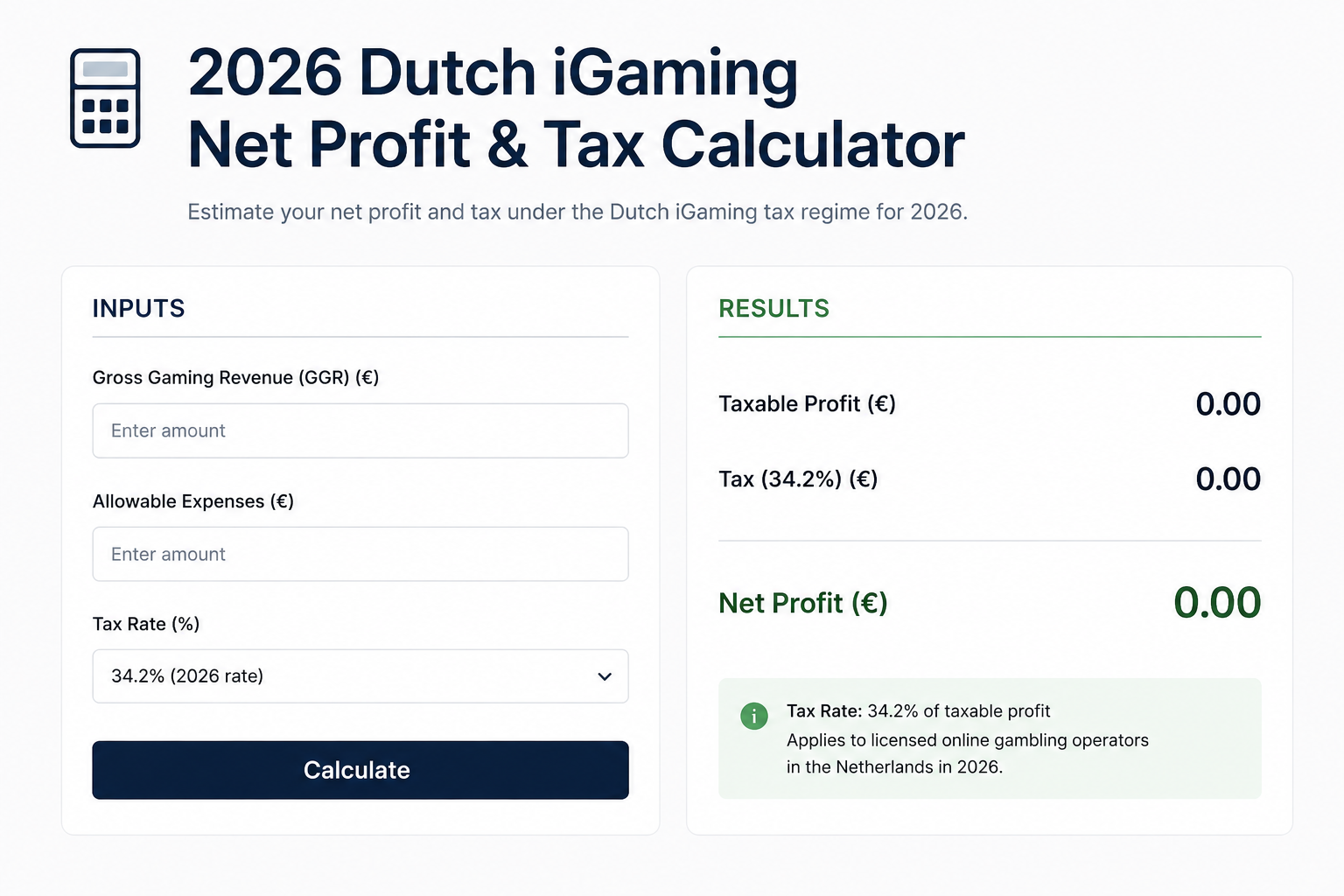
2026 Dutch iGaming Net Profit & Tax Calculator
Analyze the impact of the upcoming 37.8% Dutch gambling tax on your Gross Gaming Revenue (GGR), bonus strategies, and affiliate acquisition costs.
*Calculations are based on 2026 projected tax rates (37.8%) on GGR without bonus deductions, as per KSA standards.

Understanding the 2026 iGaming Tax Shift in the Netherlands
The Dutch iGaming landscape is entering a period of significant fiscal transition. For operators, affiliates, and stakeholders in the regulated market, the road to 2026 is paved with substantial tax increases that will fundamentally alter profitability models. What began as a 30.5% baseline in 2024 is rising through a phased approach: 34.2% in 2025, reaching a staggering **37.8% of Gross Gaming Revenue (GGR) by January 1, 2026**.
This 2026 Dutch iGaming Net Profit & Tax Calculator is designed to provide immediate clarity on how these shifts impact your bottom line. At 37.8%, the Netherlands will host one of the highest gambling tax rates globally, challenging the viability of current acquisition costs and bonus structures.
Why the 37.8% Rate Changes Everything
In most jurisdictions, tax is a variable that sits comfortably within the operating margin. However, when the tax rate approaches nearly 40% of GGR, the “channelization” goal of the Kansspelautoriteit (KSA) faces pressure. For operators, this means that for every €1.00 won from players, €0.378 goes immediately to the Dutch Treasury, regardless of marketing spend, personnel costs, or technical infrastructure overhead.
Key Data: The Phased Increase
| Year | Tax Rate (%) | Impact Level |
|---|---|---|
| 2024 | 30.5% | Baseline |
| 2025 | 34.2% | Moderate Compression |
| 2026 | 37.8% | High Compression |
Calculating Profitability: GGR vs. NGR
In the Dutch market, the *Kansspelbelasting* is calculated on Gross Gaming Revenue (GGR). It is vital to remember that in the Netherlands, you cannot deduct bonuses or incentives from the taxable amount. This creates a significant “bonus tax” effect. If an operator offers €100,000 in bonuses to achieve €500,000 in GGR, they are still taxed on the full €500,000.
This reality makes our 2026 calculator essential for SEO specialists and marketing managers. When margins are this thin, every euro spent on acquisition must be tracked with surgical precision. Traditional CPA (Cost Per Acquisition) models that worked at a 29% or 30.5% tax rate may become loss-leaders at 37.8%.
The Impact on Affiliate Models
Affiliates working in the Dutch market must also brace for the 2026 shift. Operators facing lower net margins are likely to renegotiate RevShare agreements or reduce CPA bounties. As an expert in Dutch iGaming content, Maurice Kruytzer emphasizes the need for **higher-quality, high-intent traffic**. When the tax burden is high, “vanity metrics” like raw click-through rates become less valuable than high-lifetime-value (LTV) players who justify the tax expense.
Strategic Adjustments for 2026
How should a professional Dutch iGaming business react to the 37.8% tax regime? It comes down to three pillars: Efficiency, Compliance, and Quality.
1. Editorial Efficiency
With margins squeezed, spending large sums on inefficient content production is no longer viable. This is where AI-assisted editorial workflows—managed by human experts—become a competitive advantage. By leveraging AI to handle structure and data processing while maintaining human editorial oversight for nuance and compliance, operators can maintain their SEO presence without bloating their editorial budgets.
2. Compliance as a Cost-Saver
The KSA is rigorous. A single compliance failure can lead to fines that far outweigh the tax burden. Ensuring that all content, reviews, and marketing materials are “Publication Ready” and strictly follow Dutch regulations is not just about ethics; it’s about protecting the remaining 62.2% of your revenue.
3. GEO and SEO Synergy
As search evolves into Generative Engine Optimization (GEO), your content needs to be authoritative. High-tax environments favor established brands with high trust (EEAT). Quality Dutch content that answers specific player queries—rather than generic gambling keywords—will provide the best ROI in the 2026 landscape.
Frequently Asked Questions
Navigate the 2026 Market with Expert Guidance
As the Dutch iGaming market becomes more complex and fiscally demanding, the quality of your content and the efficiency of your workflow will determine your success. Maurice Kruytzer provides professional Dutch iGaming content writing and AI-assisted editorial services designed for the regulated market.
Don’t let high taxes squeeze your margins. Invest in content that converts and complies.