The 2026 Dutch license application: why 40% of filings fail is not a mystery, it is a process problem. We see the same failure patterns when operators and supporting teams rush documentation, misunderstand what “complete” means, or treat compliance as paperwork instead of evidence.
Key takeaways: The 2026 Dutch license application, in plain terms
| Failure pattern | What goes wrong |
| Incomplete application file | Missing proof, unclear ownership, or documentation that does not match the Dutch iGaming compliance reality. |
| Weak alignment with Dutch transparency expectations | Claims without verifiable disclosures, especially around payouts and player-facing timing. |
| Compliance language that does not hold up | Promotional framing, unclear responsibility boundaries, or content that is not demonstrably safe for restricted markets. |
| Operational readiness gaps | Processes that exist on paper, but not as testable controls and workflows. |
| Supplier and content workflow risk | When AI or content teams cannot prove review, verification, and editorial independence. |
| Documentation consistency failures | The “same story” is told differently across documents, policies, and disclosures. |
- Start with the evidence, not the narrative. Operators need a file that can be checked, not just believed.
- Verify what can actually be verified. This is also the mindset behind our transparency audit work: what operators disclose, and where verification stops.
- Build compliance content with constraints in mind. If you produce betting or iGaming content, the framing and responsibility language matter.
- Use human review where it must be human. Dutch licensed markets still need “reality checks”, not blind automation.
- Don’t mix governance models. The app file has to reflect your true structure and accountability.

Related reading: If you want the same “what can you verify” lens applied to casino claims and player-facing disclosures, see The 2026 Dutch Online Casino Transparency Audit: What You Can Verify and What You Cannot.

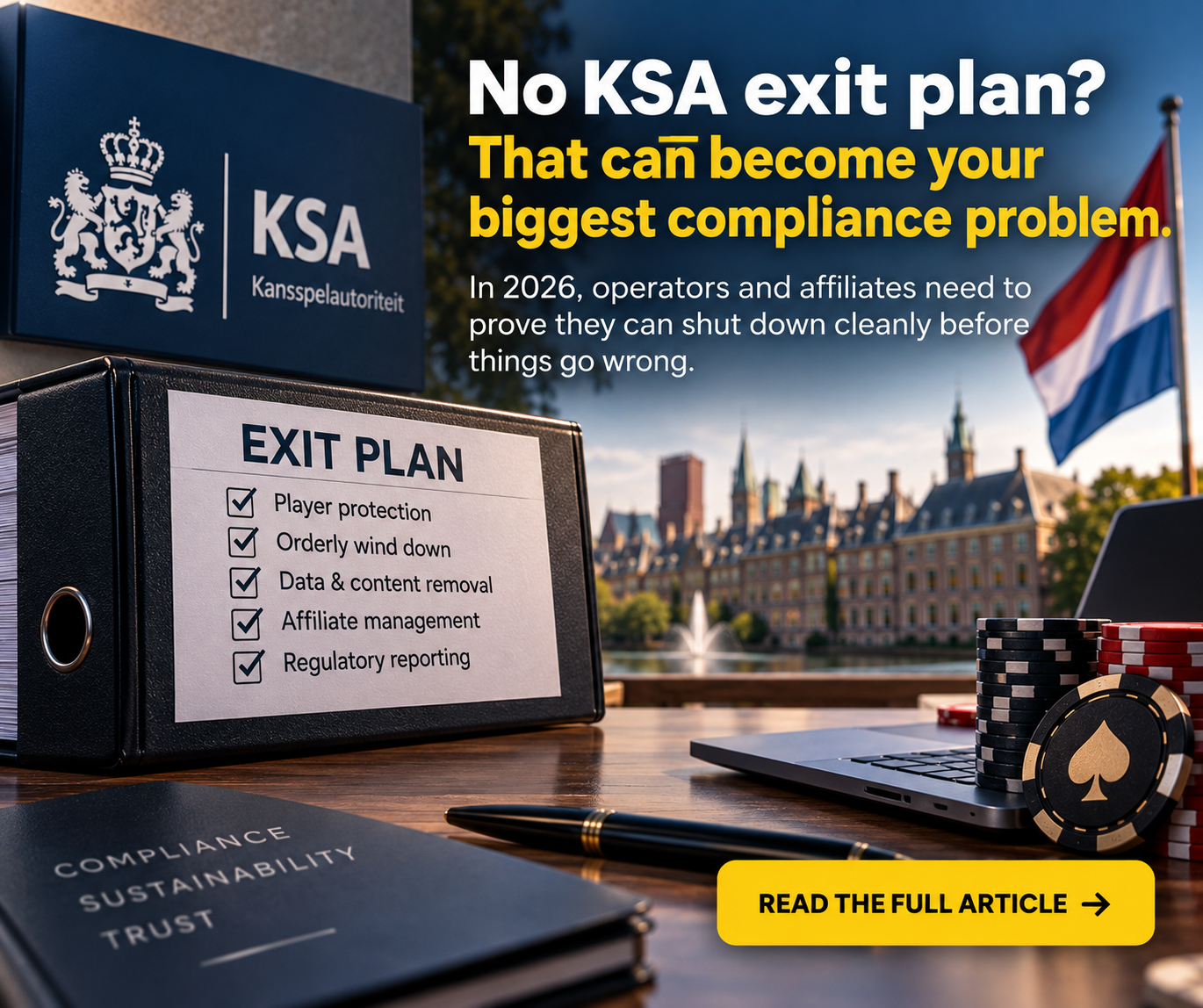
Operators face steep resubmission costs when a 2026 application misses the mark first time.
Why “complete” is the real gate in the 2026 Dutch license application
In 2026, the biggest reason the 2026 Dutch license application: why 40% of filings fail is simple, teams often submit a “document bundle” instead of a checkable compliance file. The problem is not always the presence of policies, it is whether the evidence inside those policies is complete, consistent, and verifiable.
We routinely see the same pattern across Dutch iGaming compliance work in 2026. A team has a policy. Another team has a procedure. A third team has a spreadsheet that suggests how the procedure would run. But the regulator can only assess what is actually in the file, and how tightly it connects to your operational controls.
Think of it like license application hygiene. If one part of the application file describes a control, but another part of the player-facing disclosure contradicts it, you create a gap that has to be explained, reworked, and resubmitted.
- Ownership and accountability mismatches: The application story must match governance and sign-off lines.
- Missing “proof of execution”: Policies without evidence of how they are applied in real workflows.
- Unclear responsibilities: Who reviews content, who verifies claims, who can stop a risk signal.
- Version drift: Old policies referenced in the wrong documents, updated elsewhere but not in the submission.
Transparency expectations, and why casino claims are not enough
The 2026 Dutch license application: why 40% of filings fail also comes down to transparency expectations that are stricter than marketing copy. In 2026, operators can publish “fast payouts” and “high security” claims, but what the regulator and auditors care about is what you can substantiate.
Our Dutch casino transparency audit work makes the point clearly: a claim is easy to write, and much harder to verify from the outside. When applicants cannot show how timing, disclosure wording, and actual operations stay aligned, the file starts to look like trust-by-website, not trust-by-control.
What this means for your application file
- Player-facing disclosures must map to operational reality. If you say withdrawals happen in a certain way, you must be able to show how that promise is monitored.
- Consistency matters across the audit trail. The same timing logic should not change between terms, help pages, and internal policies.
- Verification boundaries must be honest. If something cannot be externally verified, you need to explain the control approach, not pretend it is measurable by consumers.
If you are building your application with this “verifiable or not” mindset, you reduce the chance that the application fails due to claims that cannot be checked.
Compliance content in 2026: where applications break (and how to fix it)
When applicants fail the 2026 Dutch license application: why 40% of filings fail, compliance content is often part of the story, even when the failure is framed as documentation. In 2026, teams increasingly use AI-assisted workflows for content production, and the regulator will still expect you to show human control, responsible framing, and verification.
For Dutch markets, “safe wording” is not vague. It is about whether promotional implication is controlled, whether responsibility boundaries are clear, and whether content avoids restricted-market risks. That is why our playbooks focus on KSA-compliant betting content principles, even when you apply them inside Dutch operations and workflows.
Two content failure modes we see in 2026
- Generic compliance language: “We follow responsible gambling rules” without showing what that looks like in specific editorial checks.
- AI output without traceable review: The application cannot just say AI helped. It must show how editorial control prevents risky claims or misleading framing.
Practical fix: treat content like a controlled process. Define review steps, document how the team checks claims, and keep records that demonstrate independence and verification.
If you want a direct content-focused reference point for teams in 2026, read Best Practices for Creating KSA Compliant Betting Content in 2026 and adapt the same control logic to Dutch compliance evidence.
LLM, AI workflows, and why “we use AI” can add risk to the 2026 file
In 2026, applicants are using AI for editorial speed, translations, summarisation, and product content. That is not automatically a problem. The 2026 Dutch license application: why 40% of filings fail happens when teams cannot show how AI is governed and verified.
We approach this as an evidence and workflow question. If AI recommends content, answers player questions, or helps generate betting information, the operator needs a clear chain of control. That is the same idea behind our work on LLM tracking and understanding how your brand role appears in AI-generated answers.
Instead of asking only whether “we are mentioned”, teams should ask what questions you are used to answer, and whether your content can be trusted in the format LLMs reproduce. The application should reflect that reality, not just the tools you use.
What the application should demonstrate in 2026
- Editorial control: human review gates that actually stop unsafe output.
- Verification mechanisms: how you confirm claims, data, and responsible framing.
- Independence boundaries: no hidden “auto-promotion” inside workflows.
- Auditability: records of what changed, who approved, and why.
If you want a workflow lens for this, we recommend KSA Compliant AI Content: The Fluff-Free Playbook for Dutch iGaming Operators in 2026.
Operational readiness beats marketing claims, every time
The 2026 Dutch license application: why 40% of filings fail can look like “paperwork issues”, but the root is operational readiness. If you cannot show how you run player-related processes, how you handle disputes, how you verify responsible gambling safeguards, and how you keep content accurate over time, the application will not read as credible.
In 2026, the best applications connect player experience, content governance, and compliance checks into one story. Not a story told once, but a story that is consistent across internal procedures, documentation, and player-facing disclosures.
Use this checklist before you file
- Controls are described as controls: who checks, when they check, what they check, and what happens if they find a problem.
- Documentation is consistent: no conflicting versions of the same policy across the bundle.
- Evidence is mapped: you can point from a player-facing statement to the internal control that supports it.
- Third parties are covered: supplier responsibilities, content dependencies, and verification ownership.
This is also why transparency and “reality checks” matter in regulated iGaming. If you cannot reality-check your own claims, a licensing file will struggle to convince anyone else.
Why Dutch casino reviews need a human “Reality Check” in 2026 is a useful parallel reference for building your own evidence mindset.

The Dutch application filing mindset: treat it like “license application” proof, not paperwork
There is a reason so many teams search for guidance around license application and provisional license style processes. In 2026, applicants do not just want a yes or no decision, they want to understand what “acceptable” looks like before they risk delays.
Our view is that the 2026 Dutch license application: why 40% of filings fail is a warning signal for process maturity. If your application is built like a compliance brochure, you will lose time. If it is built like an evidence pack, you can shorten the feedback loop and reduce resubmission cost.
And because teams are also juggling cross-border requirements, the confusion around “license-like” administrative steps shows up in internal project planning. We see operators borrowing the wrong mental models from unrelated domains, like documents for an international license apply or apply for provisional driving license workflows, and then applying that loose thinking to regulated iGaming evidence. In licensing, the analogy fails, evidence needs specificity.
What to do if you are preparing for the 2026 Dutch license application right now
If you are mid-process for the 2026 Dutch license application, you need to focus on the parts that tend to fail at scale: evidence completeness, transparency mapping, and content workflow governance. The goal is not to “sound compliant”, it is to show your controls work and your disclosures match.
To get practical, we recommend using a two-stage approach. First, a gap audit on your application file. Second, a workflow proof check on the operational areas that most often generate regulator questions: transparency disclosures, content review gates, and documentation consistency.

Stage 1, do a gap audit of the application file
- List every promise you make in the submission, then mark whether you can support it with internal evidence.
- Check consistency across documents, especially ownership, responsibilities, and timing descriptions.
- Confirm that supplier roles are clear, including who verifies and approves what.
Stage 2, prove workflows, not intentions
- Run a “content control test” on 2026 workflows, especially if AI assists production.
- Validate that transparency statements connect to actual operational monitoring and escalation paths.
- Ensure you can demonstrate editorial independence and verification steps in a way that is readable by outsiders.
When teams build like this, the 2026 Dutch license application: why 40% of filings fail becomes less about luck and more about method.
Support option: If your application needs reliable Dutch iGaming content work with compliance awareness, explore Dutch iGaming content services.

Conclusion: the 2026 Dutch license application is a proof test, not a paperwork test
The 2026 Dutch license application: why 40% of filings fail is, in most cases, not about intention. It is about evidence, consistency, and control, especially around transparency claims and content governance in 2026. If you build your application file like a checkable compliance pack, you reduce the risk of rejection and costly resubmission cycles.
The question for operators preparing in 2026 is straightforward: can an outsider verify your disclosures from the submission, and can you show the workflows that make those disclosures true?
Frequently Asked Questions about the 2026 Dutch license application
Why do 40% of the 2026 Dutch license application filings fail?
Most failures come from incomplete or non-checkable evidence. In the 2026 Dutch license application, the application must clearly show controls, consistency across documents, and verifiable transparency disclosures, not just promises made on paper.
What does “complete” mean for a Dutch license application in 2026?
In 2026, “complete” means every operational promise and policy claim in your file can be supported by evidence you can point to. If your disclosures cannot be verified from your submission and workflow records, your 2026 Dutch license application risks failing.
How should operators handle provisional license style steps while preparing in 2026?
If you are planning around a provisional license approach, treat it as a governance and evidence rehearsal. The 2026 Dutch license application still needs proof of workflow execution, so you cannot rely on assumptions, timelines, or vague compliance statements.
What transparency disclosures cause the most issues in the 2026 Dutch license application?
Player-facing claims like payout timing and withdrawal behavior often cause problems when they cannot be substantiated. The 2026 Dutch license application expects disclosures that map to real monitoring and escalation controls, not marketing wording.
Can AI content still be used in 2026, and how does that affect the 2026 Dutch license application?
AI can be used, but your submission must show human editorial control, verification steps, and independence boundaries. Without that evidence, the 2026 Dutch license application can fail even if content is produced quickly.
What should be in the application file to prove content and responsible gambling controls?
You should include clear responsibility lines, review gates, and records showing how claims are verified and framed responsibly. For the 2026 Dutch license application, this is what turns “we follow rules” into verifiable control evidence.
How do we avoid resubmission costs after rejection in 2026?
Do a gap audit on your application file before submission and run a workflow proof check on the areas most likely to be questioned. For the 2026 Dutch license application, consistent documentation and verifiable transparency mapping are the fastest ways to reduce resubmission risk.
Written by Maurice Kruytzer