In 2026, iDEAL still processes 1.3 billion transactions in the Netherlands. That number alone tells you why “which payment converts better?” cannot be a generic CRO exercise.

Key Takeaways
| What matters for conversion | Practical implication (Dutch players) |
|---|---|
| Bank-direct familiarity wins | iDEAL feels “local” and low-friction, especially on mobile payment casino journeys. |
| Trustly’s edge is speed and breadth | Trustly can help when players want a quick redirect flow, or when iDEAL is less preferred on that device/session. |
| UX beats ideology | The “payment choice moment” and error handling often matter more than the method itself. |
| Compliance-ready content improves trust | Dutch player decisions are trust-driven, and iDEAL vs Trustly pages must read right for the regulated market, not like a generic payments blog. (See Dutch iGaming content services.) |
| Affiliate pages can leak conversion | If your explanation about deposit flows is vague, players hesitate. Write it like you’re answering one specific question. |
| Measure the whole journey | Don’t just compare “deposit conversion”, split it by device, step, and fallback paths. |
- Q: Is iDEAL still the default choice in 2026? A: For most Dutch players, yes, because bank-direct familiarity and scale still dominate.
- Q: Does Trustly convert for Dutch users? A: Yes, but you need the right UI moment, the right mobile payment casino context, and clean fallback handling.
- Q: Should we remove Trustly if iDEAL is “bigger”? A: Usually no. Better: keep both, but optimize the route that actually reduces friction for each player segment.
- Q: What do “phone payment casino” users respond to? A: Clear step-by-step expectations, fast redirects, and no confusing payment method wording.
Want a faster way to pressure-test your payments pages? Use this link to explore how we validate content and flows without guessing.

Why this comparison is harder than it sounds
Most teams treat iDEAL vs Trustly like two interchangeable buttons. They are not.
In the regulated Dutch market, players are not making a payments decision in isolation. They decide inside a whole trust stack, on a device that may be unpredictable, under time pressure, with a deposit screen that has exactly one job: take the player to “funds added” with minimal doubt.
So when we ask iDEAL vs Trustly: which actually converts Dutch players? the real question becomes: which method plus which flow design reduces hesitation for your specific audience in 2026?
iDEAL vs Trustly: what Dutch players experience in 2026
Here’s the clean mental model we use with operators and content teams. Players don’t optimize payments, they optimize certainty.
- iDEAL (bank-direct familiarity): players typically know what to expect, which reduces “deposit anxiety” when the UI looks unfamiliar or the session is on mobile.
- Trustly (redirect and breadth): players may value speed, but they still need clarity on what will happen next, especially if the flow includes a bank selection or a redirect that feels different from their usual pattern.
Translation to your funnel: if the payment choice screen is unclear, or the method description feels generic, iDEAL will look “safer” and Trustly will underperform. If your Trustly page explains the steps properly and your error handling is sharp, Trustly can take share in specific segments.
And no, this is not about pretending everyone likes the same thing. It’s about reducing drop-offs caused by uncertainty.

What actually converts: the payment page and deposit UX
Here’s the thing most teams miss: the conversion gap between iDEAL and Trustly is often created before the player ever reaches the actual payment step.
In 2026, players increasingly land through content. Affiliate pages, operator pages, and “mobile payment casino” searches all funnel into the same moment: “How do I deposit, and what will happen next?”
So your copy and UX must do three jobs:
- Set expectations (what happens after you click)
- Reduce friction (how long it takes, what inputs are required)
- Handle doubts (what to do if something fails, where the player can retry)
If your iDEAL section explains the flow in plain Dutch, while your Trustly section is vague or “templated”, iDEAL vs Trustly: which actually converts Dutch players? becomes a content problem disguised as a payments problem.
We also see this with “phone payment casino” journeys. On mobile, players read less. Your steps must be short, obvious, and consistent.
Local intent beats generic payments language
Most payment-method comparisons online are written for a global audience. That’s why they feel “off” to Dutch players.
Localization and Dutch proofreading separate compliant operators from the noise. Not because regulators care about commas, but because players do.
In 2026, when you write about iDEAL vs Trustly, the player expects clarity in a regulated context. That means:
- No copy-paste blocks that read foreign.
- Real deposit-step wording, not vague “secure payment” claims.
- Consistent terminology across your casino deposit, your FAQ, and your payment method page.
- Clear differentiation when someone searches “boku payment casino” or “gambling sites that take paypal”, because that signals the player is browsing by payment preference.
And yes, you still need Trustly in the mix. But you need to earn that button click. Players do not reward “we accept many methods” statements, they reward certainty.
Where Trustly can win (even if iDEAL dominates)
If iDEAL dominates because it feels familiar, Trustly wins when you make the alternative feel just as predictable.
In practice, Trustly can outperform for:
- Specific segments (players whose usual deposit method behaviour aligns better with Trustly’s flow).
- Mobile payment casino funnels where your mobile experience guides the player cleanly through what happens next.
- Cross-border or multi-method users who may already know the Trustly brand and respond to that familiarity.
But this only works if you treat Trustly as a first-class flow. Not a placeholder option on the payment screen.
Also, make sure you do not confuse players with vague method descriptions. Your Trustly section should answer the question that the user actually typed, like: “Trustly works how exactly?” Then write it in short steps.

iDEAL commands a huge share of Dutch online payment transactions, dwarfing challengers like Trustly.
Measurement that does not lie: compare the whole route
You cannot decide iDEAL vs Trustly: which actually converts Dutch players? with a single headline metric. If you do, you end up optimizing the wrong step.
In 2026, we recommend measuring at least these layers:
- Method selection rate by device (mobile vs desktop) and entry source (content landing vs direct deposit).
- Click-to-redirect drop-off for Trustly specifically, because redirects expose confusion quickly.
- Error recovery rate (how many users retry after a failed attempt).
- Time-to-completion (players interpret delays as “something is wrong”).
- Fallback outcomes (does the player end up switching methods, abandoning, or contacting support?).
We also separate outcomes for “phone payment casino” cohorts because mobile behaviour is not just a smaller screen size. It’s different reading patterns, different patience windows, and different session friction.
If you build this properly, iDEAL vs Trustly comparisons stop being opinion and start being actionable intelligence.
Content strategy for iDEAL vs Trustly: the “intent cluster” approach
Here’s where our pipeline mindset shows. You do not need a single “payments page”. You need a structured set of answers that match what players actually ask.
In 2026, that means building an intent cluster around payment preferences, not around payment providers.
Use these angles to plan your content:
- iDEAL-focused pages: “how iDEAL deposits work”, “what to do if iDEAL fails”, “iDEAL on mobile” (mobile payment casino intent).
- Trustly-focused pages: “Trustly works how exactly”, “Trustly deposit steps”, “how redirects work on mobile”.
- Adjacent payment queries: users also compare “boku payment casino”, “gambling sites that take paypal”, and “paypal gambling sites” when they are browsing by payment option.
When you connect these pieces, iDEAL vs Trustly: which actually converts Dutch players? stops being a fight between two methods. It becomes a conversion system where each payment method has a clear role in your funnel.
And this is where compliance-ready language matters. The text reads foreign, the compliance language is wrong, the trust evaporates. You do not want that, especially on payment pages.
What we would do next if we had your funnel
We keep it practical. If you want answers in 2026, run experiments that reflect the real decision points.
- Improve Trustly clarity first: shorten the deposit explanation into 3 to 5 steps, match it to your actual flow, and remove any ambiguous language.
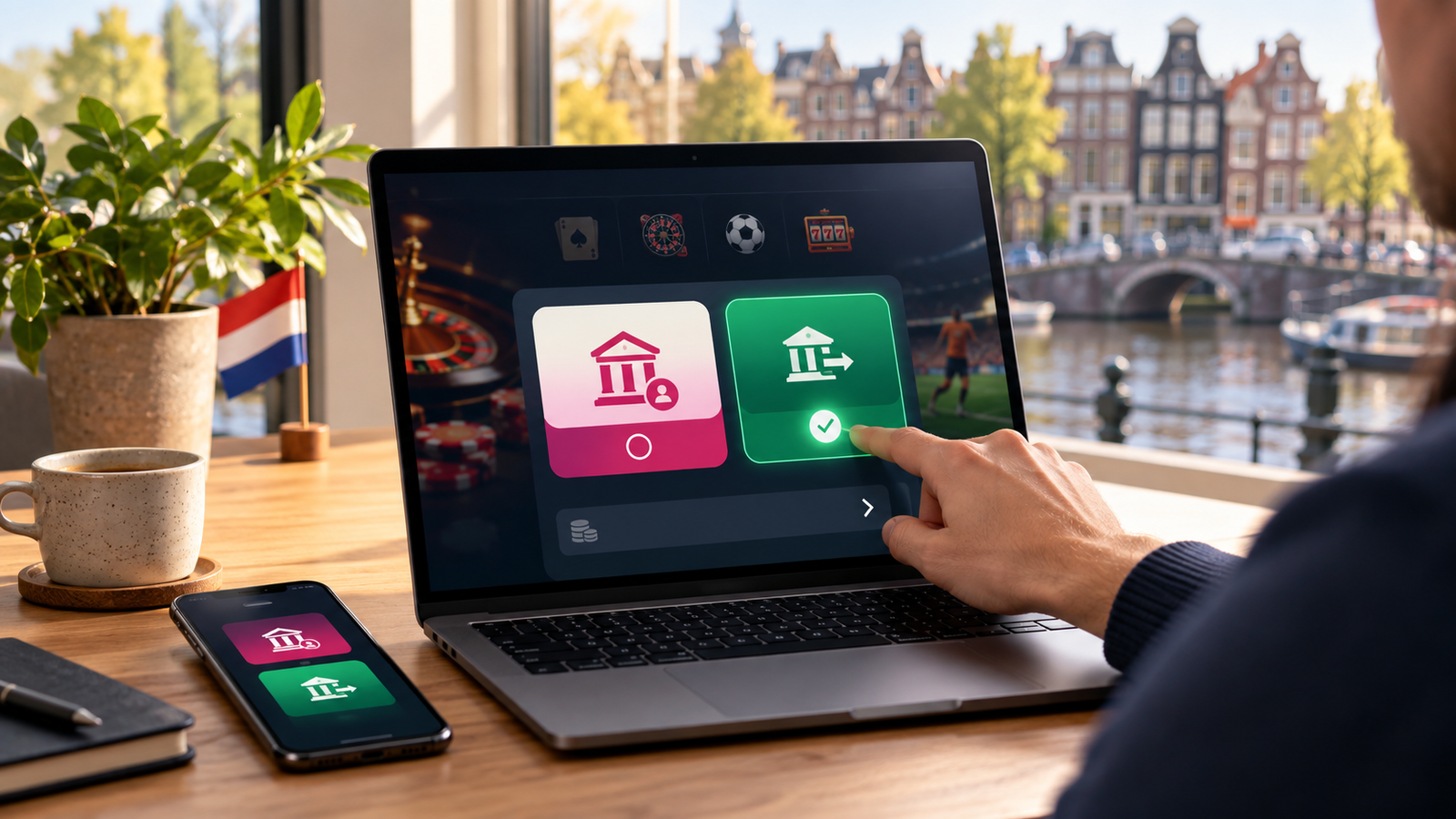
- Test payment choice moments: where do players decide between iDEAL and Trustly, and what UI element triggers the decision?
- Segment by “phone payment casino” behaviour: do not mix mobile and desktop outcomes.
- Measure error recovery: iDEAL might win on “first attempt”, Trustly might win on “retry success”.
- Keep both methods unless you can prove Trustly never reaches completion for your audience.
If you want this supported by human-in-the-loop oversight, our approach focuses on building compliant, localization-first payment content that does not feel like a generic payments template. That is the difference between shortcuts and a scalable publication pipeline.
Need Dutch iGaming payment-method content that players actually trust?
Frequently Asked Questions about iDEAL vs Trustly (2026)
Which converts better for Dutch players in 2026, iDEAL vs Trustly?
For most Dutch players, iDEAL vs Trustly: which actually converts Dutch players? usually lands in iDEAL’s favour because bank-direct familiarity reduces hesitation. But Trustly can convert strongly when the redirect flow is explained clearly and the mobile funnel is handled properly.
Do Dutch players use Trustly for mobile payment casino deposits?
Yes. Trustly can work for mobile payment casino journeys, but the conversion depends on whether your deposit screen sets expectations before any redirect happens. If your Trustly information is vague, iDEAL will almost always steal the click.
Are gambling sites that take paypal competing with iDEAL vs Trustly in the Dutch market?
Indirectly, yes. When players search for “gambling sites that take paypal” or “paypal gambling sites”, they often compare payment options by trust and familiarity. Your iDEAL vs Trustly pages should match that intent, otherwise players bounce to whatever feels easiest.
Does boku payment casino interest mean players will avoid Trustly?
Not automatically. “boku payment casino” intent is still payment-method driven, not method-loyalty driven. If you explain the steps for each method properly, you can capture players who are currently looking for their preferred route, including Trustly.
Should we remove Trustly if iDEAL is more popular?
Usually no. Even when iDEAL dominates, Trustly can perform for specific segments and for certain devices or sources. The right answer in 2026 is to measure the full path, not just deposit conversion in aggregate.
What content should operators publish to improve iDEAL vs Trustly conversion?
Publish clear, step-by-step deposit instructions for both methods, include what happens after clicking, and explain what to do if the flow fails. That’s how you reduce uncertainty in 2026, and it directly supports iDEAL vs Trustly: which actually converts Dutch players? outcomes.
How do we test iDEAL vs Trustly without damaging the funnel?
Run controlled tests that focus on the payment choice UX, the method descriptions, and error recovery paths. Track step-level outcomes and device segments, then decide with data rather than gut feeling.
Conclusion: iDEAL vs Trustly, the honest 2026 answer
iDEAL vs Trustly: which actually converts Dutch players? In 2026, iDEAL still wins on baseline familiarity and usage dominance. But Trustly converts too, when you treat it like a real flow with clear expectations, strong mobile payment casino UX, and compliance-ready language that does not read like generic payments fluff.
The operators that get this right do not pick a winner blindly. They measure the whole route, optimize the decision moments, and build a payments content structure that answers the exact questions Dutch players search for.
Want visibility with professionals focused on Dutch iGaming payments and conversion?
Written by Maurice Kruytzer