Quiz: Is Your AI-Generated Dutch Content a Legal Liability?
The Dutch iGaming market is one of the most strictly regulated in the world. Using unedited AI “slop” isn’t just an SEO risk—it’s a regulatory target.
For international operators and content teams, the allure of using Large Language Models (LLMs) to scale Dutch localization is significant. However, the Netherlands presents a unique legal landscape where the “deployer” of AI content carries the full burden of liability. From the strict oversight of the Kansspelautoriteit (KSA) to the absence of “Fair Use” in Dutch copyright law, the margin for error is non-existent.
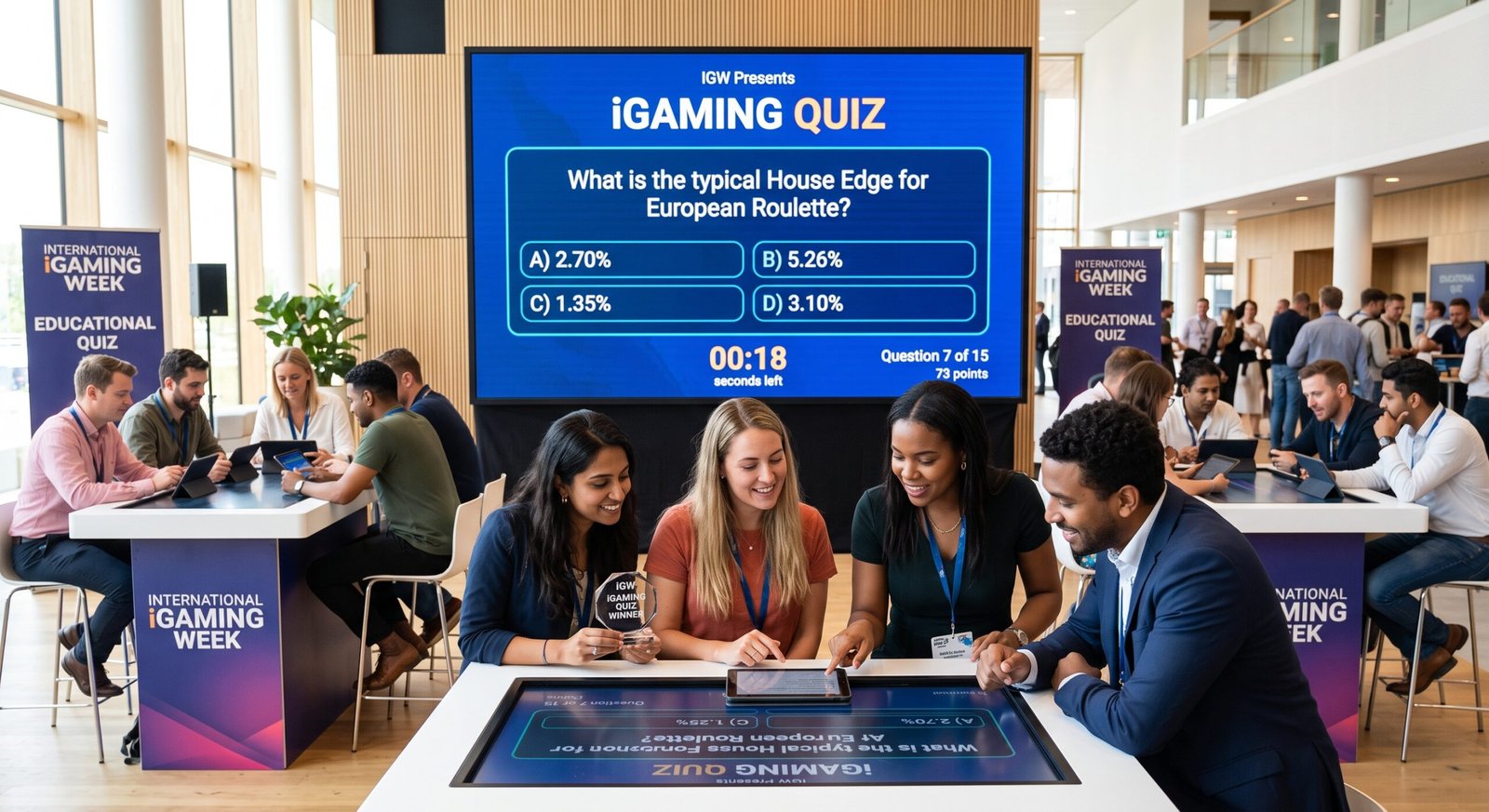
In the eyes of the Dutch regulator, an AI-generated error regarding player protection or bonus terms is not a technical glitch—it is a compliance failure. This diagnostic assessment helps you evaluate whether your current content production workflow is a sustainable asset or a ticking legal time bomb.
Need accurate Dutch iGaming content built for the local market? View our Dutch iGaming content services.

The Diagnostic Quiz
Evaluate your current content workflow. For each question, select the statement that most accurately describes your operations. Track your points to determine your risk level.
1. How is your Dutch content audited for regulatory compliance (KSA)?
2. What is your source of truth for Dutch “Duty of Care” terminology?
3. How do you verify the factual accuracy of AI-generated claims?
4. How is your “Human-in-the-Loop” workflow structured?
5. Are you aware of the origin of the data training your Dutch AI outputs?
Interpreting Your Risk Level
Why Dutch AI Content is a Unique Legal Risk
The Netherlands is not just another jurisdiction; it is a legal environment that treats digital content with professional scrutiny. Here is what the research reveals about your liability:
The “Deployer” Liability Rule
Under current Dutch and EU law, liability for AI-generated content—whether it involves errors, hallucinations, or defamation—falls squarely on the deployer. If your website publishes a blog post that incorrectly explains a sports betting bonus or misrepresents Dutch self-exclusion (Cruks) rules, the KSA will hold the operator or affiliate responsible, not the AI developer. Ignorance of how the AI arrived at a conclusion is not a valid legal defense.
No “Fair Use” in the Netherlands
Unlike the United States, Dutch and EU copyright law does not recognize the concept of “Fair Use.” If your AI generates content that mirrors existing copyrighted work—even by accident—it is viewed as an unauthorized reproduction. Recent legal analysis highlights that Dutch entities are often targets for copyright claims because the local framework allows for a Dutch subsidiary to be held liable for the actions of a global parent company’s content strategy.
The Duty of Care (Zorgplicht)
The Kansspelautoriteit places a high burden on “Duty of Care.” This extends to the information provided to players. AI “slop”—content that is repetitive, vaguely inaccurate, or poorly translated—demonstrates a lack of care. In a market where advertising and player protection are under intense political fire, unedited AI content is a signal of operational negligence.
The SEO Impact: From Authority to Slop
Beyond the legal threats, there is the issue of topical authority. Google’s E-E-A-T (Experience, Expertise, Authoritativeness, and Trustworthiness) criteria are designed to filter out low-value automation. In the Dutch iGaming niche, where competition is fierce, the nuances of the language matter.
Direct AI translations often fail to capture the specific Dutch betting vernacular. They miss the subtle differences between *vergunninghouder* (license holder) and *aanbieder* (provider) in specific legal contexts. This creates a disconnect with the reader and tells search engines that the content is not coming from a place of true expertise. This “slop” eventually leads to a slow decay in rankings as user signals decline and search algorithms devalue unoriginal, automated text.
Frequently Asked Questions
Can I be sued for copyright infringement if I didn’t know the AI used protected data?
Yes. Copyright infringement in the Netherlands is often a matter of strict liability. Intent is not always required. If the output of your AI system is an unauthorized reproduction of a protected Dutch work, the rights holder can pursue a claim regardless of your knowledge of the training data.
Who owns the copyright to the Dutch content my AI generates?
Generally, AI-generated content without significant human creative input cannot be copyrighted under current EU and Dutch law. To protect your IP, you must demonstrate a “human author” who made creative choices during the production process. Purely automated output is essentially in the public domain.
Does the EU AI Act affect my Dutch gambling site?
Yes. The EU AI Act introduces transparency requirements. Businesses may be required to disclose when content is AI-generated, and high-risk applications (which can include some forms of behavioral monitoring in gambling) face even stricter oversight. The Dutch government is actively preparing to enforce these rules through local regulators.
Is my Dutch company liable for AI content created by a US-based parent?
Legal experts warn that Dutch subsidiaries can be held jointly and severally liable for infringements occurring within the Dutch jurisdiction. If the content is targeted at the Dutch market, the Dutch entity is usually the first point of contact for legal action.
Moving Beyond AI Slop
The solution is not to abandon AI, but to integrate it into a workflow that respects the Dutch market’s complexity. A professional Dutch iGaming content strategy requires a “Human-First, AI-Supported” approach. This ensures that every piece of content published—whether a sportsbook review, a legislative update, or a responsible gambling guide—is factually sound, legally compliant, and linguistically natural.
Protecting your brand in the Netherlands means taking ownership of your output. When you treat content as a compliance asset rather than a commodity, you build the kind of long-term authority that regulators respect and players trust. The alternative is a high-stakes gamble with your license and your reputation.
Reach professionals across the Dutch iGaming market. Explore advertising and partnership opportunities on MauriceKruytzer.com.