




Stop Selling, Start Explaining: Mobile-First Gambling Education for Young Adults (Netherlands)
A 20-second gambling clip can reach a Dutch user long before a responsible gambling page has been read properly. Young adults live on TikTok, Reels, Shorts, and messaging feeds, while a lot of risk education still feels like it was built for a desktop footer. The result is a communication gap, and it creates compliance risk when “education” starts to look like promotion.

Google’s 2026 AI Search Reality Check for Dutch iGaming, and What Your Editorial Team Should Do Next
Publishing fast is easy. Publishing trustworthy and distinct content at scale is the hard part, and Google’s 2026 guidance makes the trade-off harder to ignore for Dutch iGaming publishers.
What follows is an editorial quality approach you can apply immediately, whether you use AI for drafting, structuring, localisation, or research support. The goal is simple: stop producing “more versions of the same page” and start shipping pages that genuinely add value for Dutch players.
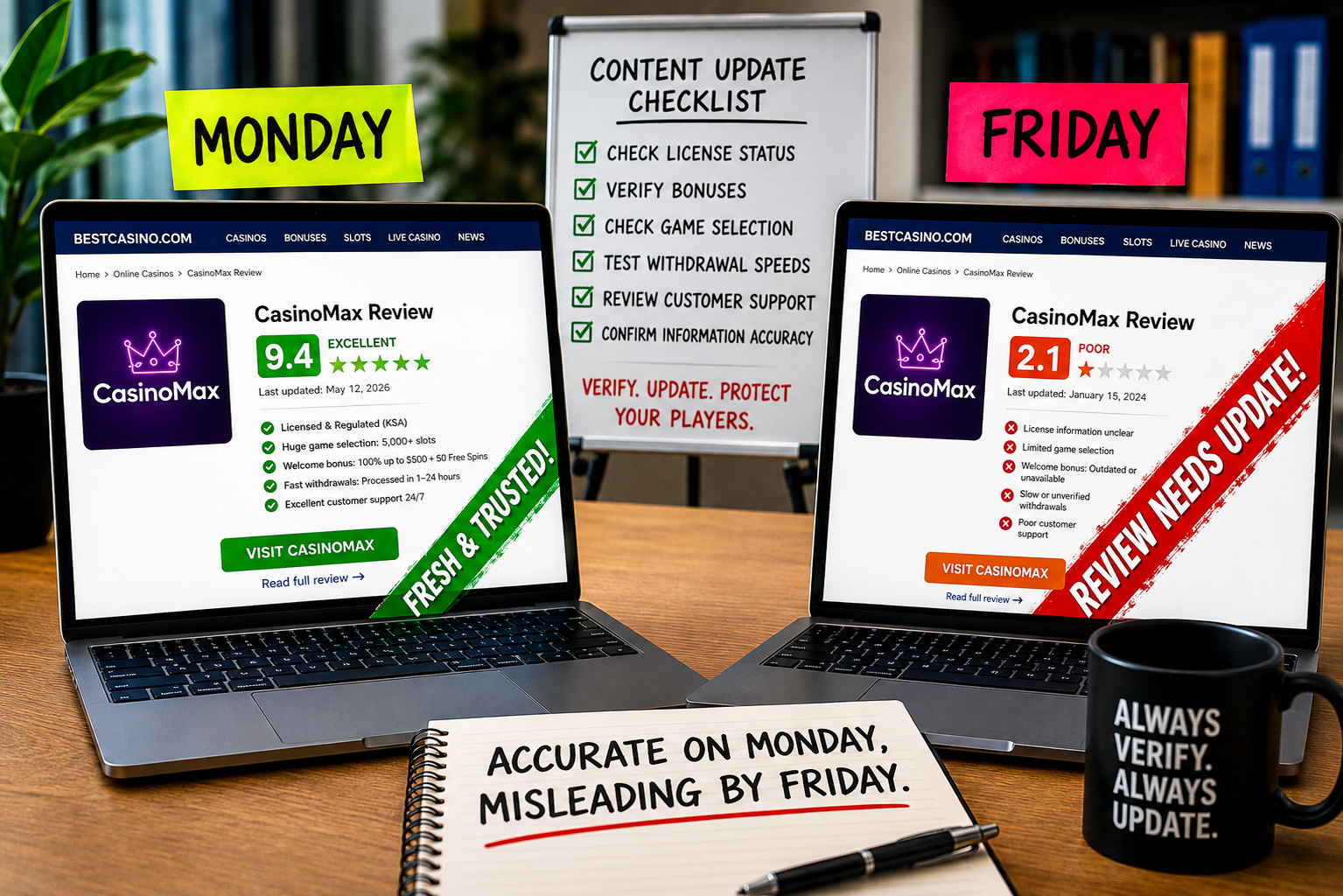
The June 2026 Dutch Gambling Reset: Build a Rapid Compliance Update System for iGaming Content Teams
A casino review can be accurate on Monday and misleading by Friday. The Dutch online gambling market is now heading into a regulatory rhythm where content can go out of date quickly, especially after the 12 June 2026 policy announcement that tightens multiple areas at once. For publishers, operators and affiliates, the legal implications are obvious. For content teams, the operational question is harder: what happens to the pages you already published?

Youth/minor targeting controls: “legal operators only” evidence requirements and editorial proof
You can have the right filters in your UI and still fail the evidence test. In 2026, regulators and enforcement teams increasingly expect you to prove that youth or minors never reach your marketing and content pathways, not just claim that “targeting is off.”