Here is a number that should reframe how you think about the market: the estimated size of the unregulated offshore gambling market in Europe by 2026 is €20 billion. That matters because European gambling regulation 2026 is not just about paperwork. It is about channelisation, enforcement credibility, and whether regulated operators can compete without cutting corners.

Key Takeaways
| What to watch in European gambling regulation 2026 | Why it matters |
|---|---|
| Licensing rules keep getting stricter | Operators need compliance-ready processes, not “we’ll fix it later” documentation. |
| Channelisation is the real battlefield | European gambling regulation 2026 aims to move players away from unlicensed offers. |
| Player protection becomes operational | Limits, deposits tracking, and responsible gambling controls are increasingly enforced by design. |
| Content and marketing compliance tightens | Regulated brands get punished when ads, bonuses, and promotions do not meet local requirements. |
| Local language and localisation accuracy matters | The text reads foreign, the compliance language is wrong, and trust evaporates. |
| Human-in-the-loop wins | AI-assisted workflows are fine, but oversight is non-negotiable for regulatory accuracy. |
- Best-for players: expect tighter limits, clearer risk controls, and fewer “fine print” surprises.
- Best-for operators: treat European gambling regulation 2026 as an operational architecture project, not a legal memo.
If you want to pressure-test your compliance-ready content and localisation for a Dutch or EU-facing market, our team can help. View Dutch iGaming content services for regulation-safe production.
If you are an EU iGaming brand, supplier, or payments provider and you need visibility with the right decision-makers, you can also explore where we place partners via advertise with us.
European gambling regulation 2026: the headline shift is channelisation
Most people think European gambling regulation 2026 is mainly about licensing renewals and new forms. That is the boring version.
The practical shift is channelisation. Regulators want players to choose regulated operators because those operators are required to implement verification, responsible gambling controls, and compliant marketing.

And yes, enforcement is a big part of it, but channelisation is also commercial. It affects how fast you can scale, how consistently you can deliver player protection, and how clean your customer journey remains from ad to account to play.
- Regulated competition becomes compliance-heavy: fewer shortcuts survive.
- Unlicensed offers keep competing on frictionless onboarding: regulated operators have to match that convenience, while still meeting KYC and controls.
- Marketing is part of compliance: bonuses, promotions, and content claims are reviewed through a regulatory lens.
Licensing in European gambling regulation 2026: stricter requirements, faster scrutiny
Across Europe, the 2026 licensing cycle is about tighter standards and faster scrutiny during onboarding and ongoing operations. You see this in how regulators look at suitability, governance, risk management, and operational readiness.
In other words: European gambling regulation 2026 pushes licensing from “permission to operate” toward “proof you can operate safely and consistently.”
What typically changes for operators in 2026:
- More emphasis on governance: decision-making, escalation paths, and documented controls.
- Stronger expectations on responsible gambling processes: deposit limits, session controls, and interventions.
- Higher bar for content and promotional compliance: the text, the offer mechanics, and the presentation all need to match local rules.
- Operational evidence beats promises: regulators increasingly want to see how controls work, not just that you have policies.
Player protection in European gambling regulation 2026: limits, tracking, intervention
Player protection is not a “nice to have” checkbox. In European gambling regulation 2026, it becomes a system you run, measure, and improve. Limits are the obvious piece, but the deeper point is tracking and intervention quality.
Here is why: if you can place a limit, but you cannot reliably track it across accounts, platforms, and deposits, then the limit is decoration. Regulators do not want decoration.
Look at how different markets enforce protection. For example, Germany implements strict deposit cap mechanics through central tracking systems. That style of enforcement is pushing other jurisdictions to think similarly in 2026.
Practical operator checklist for 2026 player protection:
- Can you demonstrate how deposit limits apply in real time?
- Can you show responsible gambling settings are consistent across devices?
- Do interventions happen with clear triggers and documented outcomes?
- Do you localise risk messaging properly, not just translate it?

European gambling regulation 2026 and marketing: why “compliant” content still fails
Most compliance discussions focus on onboarding and payments. Marketing is where things often fall apart in European gambling regulation 2026.
Because the regulator view is holistic: the offer mechanics, the wording, the placement, and the user journey must align with local requirements. If your promo language is off, you can end up with a trust problem, a regulatory exposure problem, or both.
We see recurring failure modes:
- Claims that sound harmless but are non-compliant: “guaranteed” or ambiguous bonus conditions.
- Localisation gaps: you translate, but you do not adapt. The text reads foreign, and the compliance language is wrong.
- Inconsistent responsible gambling messages: different pages show different risk cues.
- Affiliate and content ecosystem drift: even if your brand is compliant, a partner can publish non-compliant content.
For operators and publishers that want to keep a scalable publication pipeline without drowning in reviews, we focus on human-in-the-loop oversight. The AI can accelerate drafts, but the compliance check must stay real.
Regulatory divergence in European gambling regulation 2026: one EU, many rulebooks
People want “one European framework.” European gambling regulation 2026 is not that story. The EU does not magically produce a single licensing standard with identical age rules, identical responsible gambling limits, and identical marketing constraints.
You still see different minimum age approaches, and different timelines for when monopoly positions end or when license application windows open. Even when the direction is similar, the details differ enough to break “copy-paste compliance.”
So the operational lesson for 2026 is simple:
- Build modular compliance: rules vary by jurisdiction, your architecture should not.
- Localise compliance language properly: not just UI strings, but explanations and disclosures.
- Track jurisdiction-specific requirements by product type: sportsbook, casino, and account controls are not always treated the same way.
What Finland’s 2026 licensing shift signals about European gambling regulation 2026
When a market opens licensing in 2026, it is more than a policy headline. It is a signal about the direction of enforcement and how quickly expectations evolve once monopoly protections end.
Finland’s move to start accepting license applications on 1st March 2026 is a clear example of that “build now, prove later” trend.
It also raises the question every operator should ask in European gambling regulation 2026: if you launch into a new licensing window, do you already have the compliance-ready content, player protection controls, and operational evidence to satisfy the new regime?
Why 2026 compliance is a growth constraint for some operators, not all
Compliance has a reputation for slowing growth. In European gambling regulation 2026, that can be true, but only when compliance is treated as a document afterthought.
When you build compliance-ready processes into the pipeline, you can move faster. You avoid rework, reduce regulator risk, and keep the customer journey consistent.
Here is the no-nonsense way to think about it:
- If your technical foundation is wrong, no amount of long-form content will save you.
- If your content reads foreign, your trust evaporates before any conversion discussion even starts.
- If your responsible gambling controls are bolted on, you will pay for it during monitoring.
Our approach is simple: we combine a Dutch-assisted editorial team with human-in-the-loop oversight, so compliance and localisation are part of the production workflow, not a late-stage gate. That is how we keep integrity while supporting scalable output.
European gambling regulation 2026: what to do next (without pretending it is simple)
Here is the real question behind European gambling regulation 2026: what changes in your day-to-day operations starting now?
Most teams will answer with vague intentions. We recommend something operational.
- Map your customer journey per jurisdiction: ads, onboarding, deposits, responsible gambling, and support.
- Audit content and promotion flows: look for localised compliance gaps, not just “is it translated.”
- Test player protection controls end to end: deposits tracking, limit enforcement, and intervention triggers.
- Set up human-in-the-loop oversight: AI-assisted drafting is fine, but compliance checks must stay accountable.
- Document evidence, not just policies: regulators want to see how controls work.
If you are building for the Dutch or wider European market, this is also where content services and localisation quality become part of regulation risk management. Our publishing workflow is built for that reality.

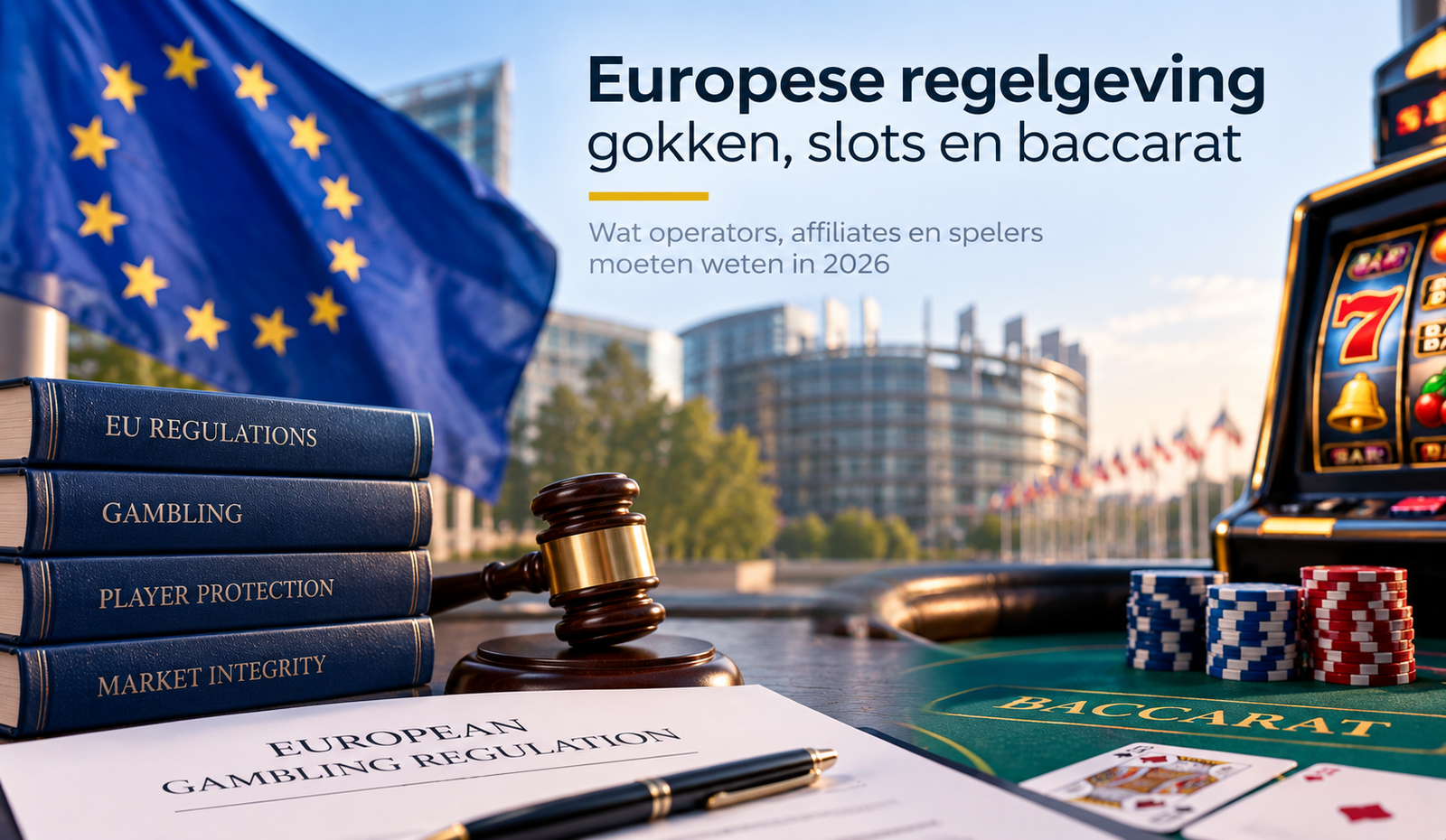
New 2026 regulatory frameworks reshape a massive European gambling industry.
Frequently Asked Questions
What is European gambling regulation 2026 actually changing for operators?
European gambling regulation 2026 is pushing compliance into the operating model, not just into paperwork. Expect tighter scrutiny of governance, responsible gambling controls, and promotion and content claims across jurisdictions.
How does European gambling regulation 2026 affect player protection and deposit limits?
It makes player protection operational and measurable, especially around deposit limits, tracking, and intervention triggers. In European gambling regulation 2026, regulators want evidence that controls work consistently in practice, not just policies on paper.
Will European gambling regulation 2026 unify licensing rules across the EU?
No. European gambling regulation 2026 still shows clear divergence across markets, including different minimum age requirements and different licensing timelines. Operators need modular compliance, not a single copy-paste playbook.
Why do marketing and localisation still matter under European gambling regulation 2026?
Because regulators assess the full user journey. Under European gambling regulation 2026, promo wording, responsible gambling messaging, and jurisdiction-specific disclosures can be compliance issues even when onboarding is perfect.
Is AI allowed for content production under European gambling regulation 2026?
AI can speed up drafting, but European gambling regulation 2026 still requires accountability and human-in-the-loop oversight for accuracy and localisation. The risk is not the tool, it is publishing content that is wrong or unclear for the local regulatory context.
How can regulated brands compete when offshore offers keep attracting players in 2026?
European gambling regulation 2026 is built for channelisation, but offshore competition stays strong when it is frictionless. Regulated brands need to match the user experience while staying compliant, especially around onboarding and responsible gambling controls.
Conclusion
European gambling regulation 2026 is not a distant policy story. It is a channelisation battle powered by enforcement credibility, stricter licensing expectations, and player protection controls that must work end to end.
So the “best” move for 2026 is to stop treating compliance as a late-stage checklist. Build compliance-ready processes into your pipeline, keep your localisation sharp, and prove your controls with real evidence.
If you want help keeping Dutch iGaming content compliance-ready, explore Dutch iGaming content services.
Looking to reach iGaming professionals across the Dutch market with clear positioning? Use advertise with us to align with decision-makers who actually care about compliance-ready growth.
Image Concepts and Prompts
Harbor link placeholder (external)
Written by Maurice Kruytzer