
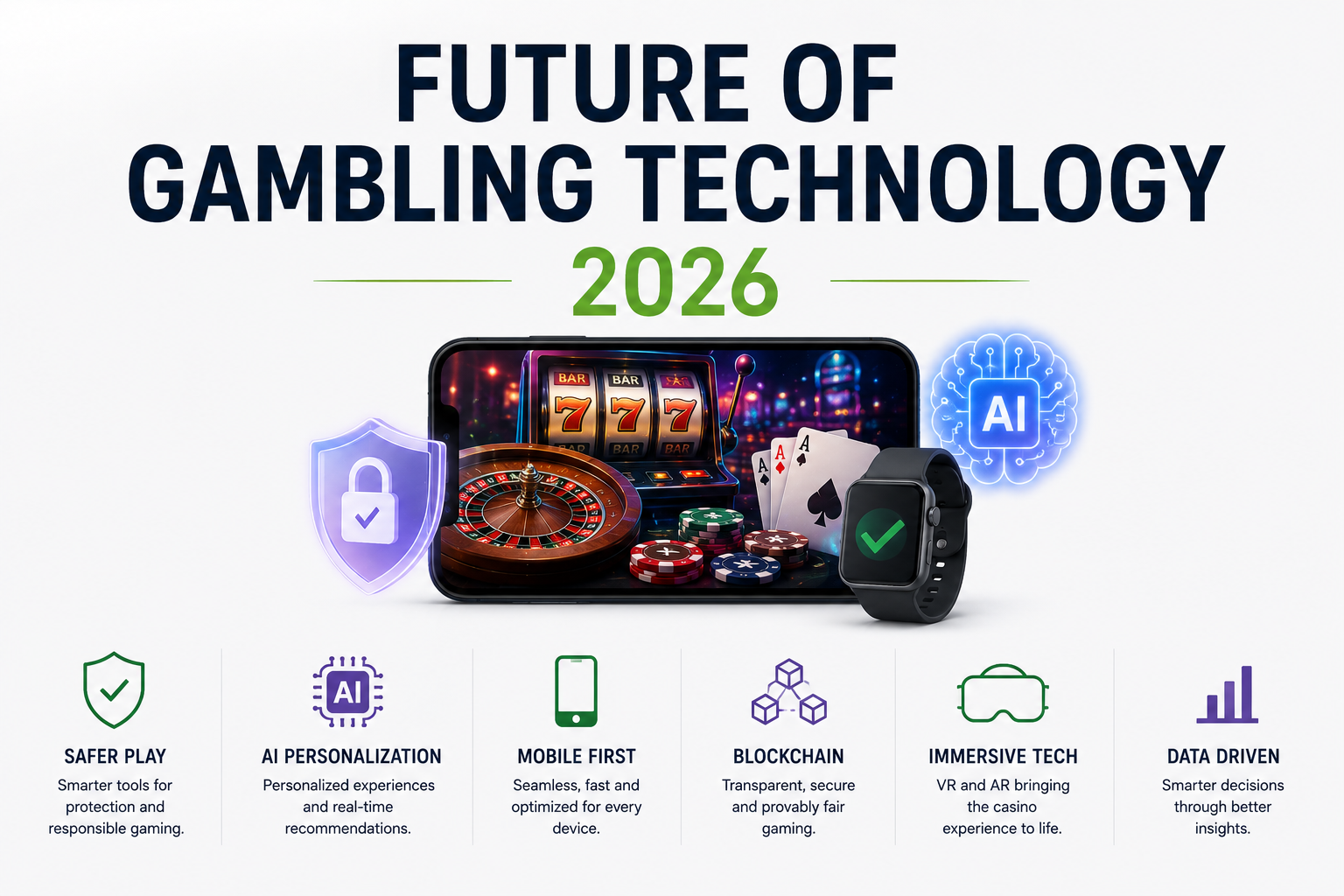
In 2020, many industry analysts predicted a total transformation of the gambling sector. The vision was clear. Casinos would move entirely onto the blockchain. Traditional registrations would disappear in favor of anonymous crypto wallets. Smart contracts would handle every payout, and virtual reality would make physical casinos obsolete. Bitcoin was expected to become the primary currency for every player.
Six years later, the reality of gambling technology looks different. While blockchain technology exists, it has not replaced established online casinos. Regulators continue to view cryptocurrency as a high risk payment method. Meanwhile, artificial intelligence has moved into the center of operations. AI now handles fraud detection, player monitoring, and compliance tasks that were once purely manual. The real change is the combination of behavioral data and automated systems within regulated frameworks.

Key Takeaways for iGaming Professionals
- AI provides more operational value than blockchain by improving fraud detection and player protection.
- Regulators, including the Dutch Kansspelautoriteit (KSA), are focusing on data driven supervision.
- Cryptocurrency remains a high risk asset due to volatility and AML concerns.
- Personalization through data must be balanced with duty of care and ethical standards.
- Human editorial review remains essential for maintaining trust in an AI assisted environment.
The Shift from Decentralization to Operational Efficiency
The original appeal of Web3 casinos was based on trust. In a traditional setting, players must trust that the operator and the software provider follow the rules. Blockchain supporters argued that making transactions visible and using smart contracts would remove the need for this trust. The Malta Gaming Authority even launched a sandbox framework to test these ideas in a controlled environment.
However, technical possibility does not always lead to widespread use. By 2026, the regulated market still depends on licensed operators and verified identities. Blockchain has become a useful technical layer for specific tasks, but it has not removed the need for centralized management. Operators still need to report to regulators and maintain clear account systems to stay compliant.

How AI Captured the Industry Focus
While many were watching blockchain, artificial intelligence became the real driver of change. Research from KPMG and the University of Nevada Las Vegas indicates that while AI maturity varies, the industry’s focus has shifted heavily toward it. In 2020, only a few conference sessions discussed AI. By 2025, that number grew to over 80. This growth is centered on practical applications like anti money laundering (AML) and customer relationship management (CRM).
The challenge for operators is achieving a meaningful return on these investments. Success with AI is not guaranteed simply by installing new software. It requires high quality data and a clear understanding of how to use it. Many businesses now use AI to monitor risk, but they still rely on human expertise to make final decisions on complex cases. This balance is critical for maintaining editorial quality and content integrity in a professional setting.
AI and the Evolution of Player Protection
Monitoring player behavior is one of the most significant uses for AI today. Gambling platforms generate massive amounts of data every day. Automated systems can track deposit frequency, changes in bet sizes, and session lengths. They can identify patterns that suggest a player is chasing losses or gambling during unusual hours. This allows for faster intervention than human teams could manage alone.
The Dutch regulator, the KSA, has taken a proactive stance on this. Chairman Michel Groothuizen has stated that the regulator will provide guidance on using AI monitoring tools. The goal is to ensure operators fulfill their duty of care by looking at a wide range of risk indicators. However, relying solely on algorithms carries risks. Systems can produce false positives, and an algorithm is only as good as the assumptions used to build it. Human oversight is necessary to ensure the technology protects players without causing unnecessary friction.

The Battle Against AI Generated Fraud
Technology often solves one problem while creating another. The same AI that helps verify customers also helps criminals attempt to bypass those checks. The UK Gambling Commission has warned that deepfake videos, face swaps, and AI generated documents are becoming more common. This has started a technological race between fraudsters and compliance teams.
Operators must now train their staff to recognize highly sophisticated fakes. This is why automated KYC (Know Your Customer) processes are not enough on their own. A robust verification system must use multiple layers of technology to stay ahead of fraudulent attempts. This practical struggle is much more relevant to today’s operators than the futuristic metaphors of virtual reality casinos.
The Persistent Risks of Blockchain and Crypto
Blockchain is not a dead technology, but its role in gambling is specialized. It offers fast transfers and transparent verification through “provably fair” systems. Some players prefer using digital assets for personal reasons. However, these benefits come with significant regulatory weight. Regulators like the UK Gambling Commission view cryptoassets as high risk because it is difficult to verify the source of funds.
Price volatility is another major issue. If a player deposits an amount that drops in value by 15 percent before they withdraw, they face two types of risk: the game itself and the currency value. This makes responsible gambling calculations much more difficult. If you are looking to start your Dutch AI article or technology report, understanding these risks is vital for providing accurate information to your readers.

Why Regulation Always Wins
A common myth of the Web3 era was that cryptocurrency would allow for anonymous, regulated gambling. This has not happened. For any operator to remain legitimate, they must identify their customers. The requirement to “identify customer” always overrides the technological feature of “connect wallet” in regulated markets. This is a primary reason why fully decentralized casinos struggle to enter the mainstream.
Accountability is the backbone of the gambling industry. When something goes wrong (such as a payment dispute or a technical bug) there must be a responsible entity to contact. Decentralized systems often lack this clear line of responsibility. In a regulated environment like the Netherlands, the focus is on increasing supervision and data driven checks, not removing the oversight that protects the public.
The Central Role of Behavioral Data
The most valuable asset in the modern gambling industry is data. AI allows operators to process this data at a scale that was previously impossible. They can see which games a player prefers and when they are likely to stop playing. This information can be used for personalization, which can improve the user experience. But it can also be used to target vulnerable players with promotions at the wrong time.
This ethical divide is where regulators are focusing their attention. Using AI to identify a player at risk is a positive application. Using that same system to maximize a player’s losses is a violation of the duty of care. Professionals in the sector must be able to explain these differences clearly, supporting their statements with facts from official documentation like those provided by the KSA or Google Search Central.
Conclusion: The Practical Future of iGaming
The expected revolution of 2020 has been replaced by a more practical evolution. Blockchain serves as a niche tool for transparency, but AI has become the engine of the industry. The winners in 2026 are the operators and publishers who use these tools within legal boundaries to improve safety and efficiency. Technology has not replaced the human element (it has simply changed the tools we use to maintain quality and trust).
Frequently Asked Questions
Does “provably fair” mean I will win more often?
No. A provably fair game only ensures that the outcome was generated correctly and was not changed after you placed your bet. It does not remove the house edge or guarantee a profit.
Why is cryptocurrency still considered high risk by regulators?
The main concerns are the difficulty in verifying the source of wealth, the high volatility of asset prices, and the potential for money laundering.
Can AI completely replace human compliance teams?
No. AI is excellent at identifying patterns and processing data quickly, but human experts are still needed to review complex cases, handle nuanced player protection issues, and ensure ethical standards are met.
For professional insights into the intersection of technology, regulation, and content creation, explore my resources on Dutch iGaming AI content strategy. If you need support with editorial review or high quality content for the regulated Dutch market, feel free to contact me for guidance.