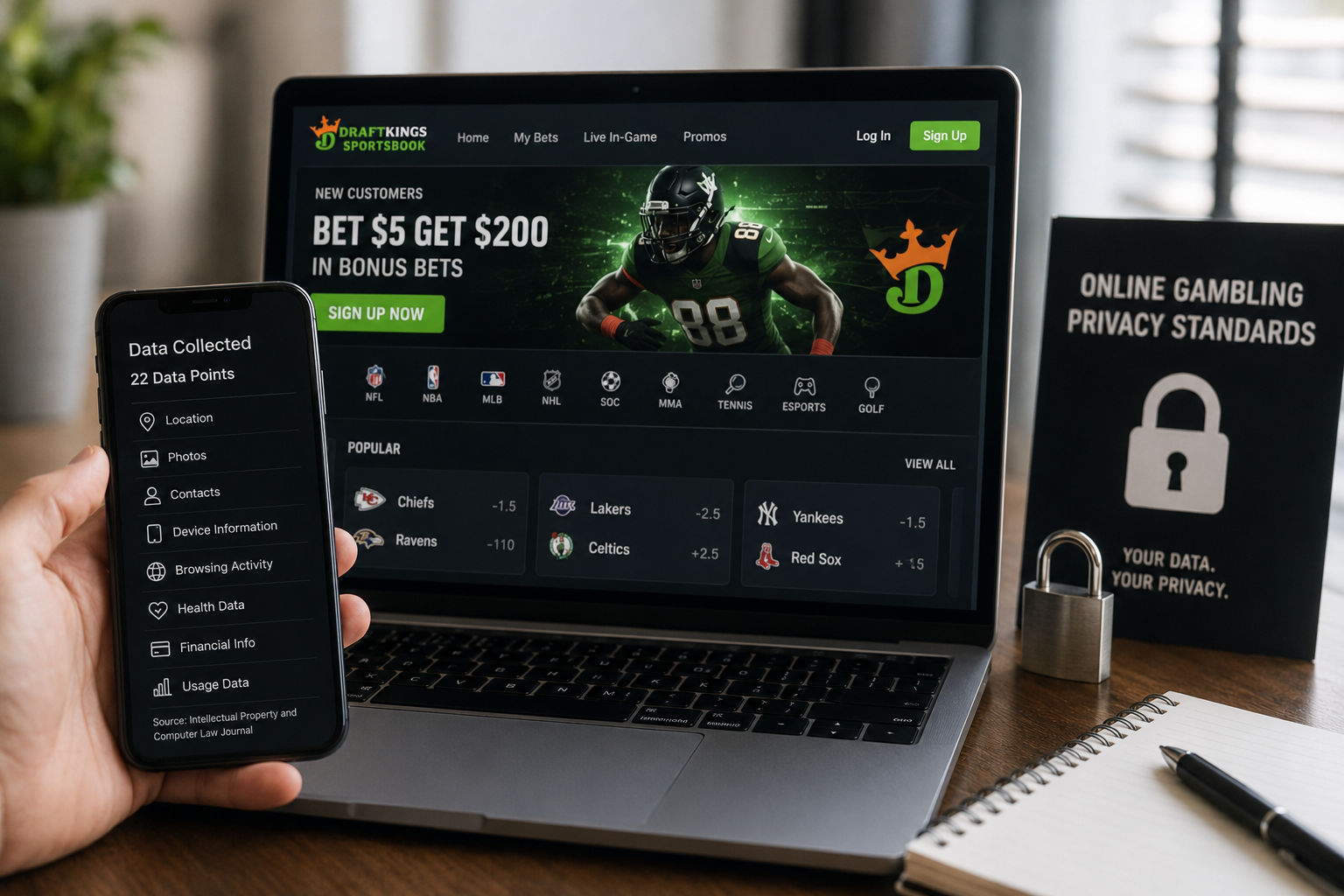
Online gambling privacy standards have become one of the most scrutinised parts of the regulated betting industry, and the numbers explain why. Research from the Intellectual Property and Computer Law Journal found that DraftKings alone collects 22 distinct data points from each user, including precise location, photos, contacts and even health data. That level of collection is exactly what strong online gambling privacy standards are supposed to keep in check.
Key Takeaways
- Data minimisation matters most. The strongest online gambling privacy standards limit collection to what’s operationally necessary, not what’s technically possible.
- Third-party sharing is the biggest risk. Apps that share data with advertising partners create exposure users rarely understand.
- KSA compliance sets the benchmark. Dutch operators face some of the strictest privacy obligations in the regulated iGaming market.
- Transparency builds retention. Players stay longer with operators who explain, in plain language, what happens to their data.
- Breach costs keep climbing. Non-compliance is no longer just a reputational problem, it’s a direct financial one.
- Localisation affects trust. A privacy policy that reads awkwardly in translation undermines the credibility of the whole standard.
- Human review remains essential. AI-assisted workflows speed up publishing, but privacy claims still need an editor who understands the regulatory context.
Why Online Gambling Privacy Standards Matter More in 2026
Players are no longer passive about how their information gets used. According to StationX, 82% of internet users say they’re concerned about how companies collect and handle personal data.
For gambling operators, that concern is amplified. Betting activity is financial, behavioural and, in many jurisdictions, legally sensitive.
This is exactly why online gambling privacy standards have shifted from a compliance checkbox to a genuine business differentiator. Operators that publish clear, honest privacy content earn more trust from players who are already wary of how much data betting apps request.
We’ve seen this firsthand while reviewing player-facing content for regulated Dutch platforms. Pages that explain data practices in accessible language consistently perform better with readers than dense legal boilerplate.
Best for KSA-Regulated Operators: Meeting Dutch Compliance Requirements
The Kansspelautoriteit (KSA) enforces some of the most detailed privacy and player-protection rules in the regulated market. Dutch operators must document exactly what data they collect, why they collect it, and how long they retain it.
This isn’t unique bureaucracy. It reflects a broader pattern: 172 countries now enforce data privacy laws, covering 79% of all nations, according to StationX.
For operators writing player-facing content, this means every privacy claim needs to match the actual policy on file with regulators. A Dutch content specialist familiar with KSA requirements can catch mismatches before they become compliance issues.
This is where a Dutch gambling content expert earns their value. It’s not just about writing clearly, it’s about writing accurately within a specific legal framework.
Best for Data Minimization: Limiting What Gambling Apps Collect
The average major gambling app collects 16 data points from users, spanning platforms like DraftKings, Caesars, Sky Bet, William Hill and FanDuel. That average hides significant variation between operators who limit collection and those who don’t.
Strong online gambling privacy standards start with a simple question: does this data point serve the player, or does it serve advertising?
Operators that can answer that question honestly, and publish the answer, tend to build stronger long-term trust. This applies whether you’re a sportsbook, a casino brand, or a crypto-based gambling platform.

Best for Third-Party Transparency: Controlling Data Sharing Practices
One of the least visible risks in the regulated betting space is third-party data sharing. Research shows FanDuel shares 11 data points with third parties specifically for advertising purposes.
Most players don’t read the fine print that authorises this. That’s a problem, because online gambling privacy standards only work if the disclosure is actually understood, not just technically present.
Operators serious about privacy publish plain-language summaries alongside the full legal policy. This dual approach satisfies regulators while actually informing the player.
“A privacy policy that only a lawyer can parse isn’t transparency, it’s just paperwork.” This is a distinction we raise often when reviewing gambling content for regulated markets.
Best for Affiliate Publishers: Building Trust Through Privacy-First Content
Affiliate sites occupy an interesting position. They don’t set privacy policy, but they shape how players perceive an operator’s trustworthiness before signup.
An affiliate content expert who understands online gambling privacy standards can flag operators with weak disclosure practices, rather than promoting them uncritically. This protects the affiliate’s own reputation as much as the player’s data.
In our experience working across affiliate marketing content for Dutch and international brands, readers respond well to honest comparisons. A review that mentions data-sharing practices, not just bonus terms, reads as more credible.
This is also where a content manager overseeing multiple affiliate properties needs consistent standards. One page praising an operator’s privacy record while another ignores it entirely undermines the whole site’s authority.
Best for AI-Assisted Editorial Teams: Human Review of Privacy Claims
AI workflows have made content production faster across the iGaming sector, including privacy policy summaries and compliance explainers. But speed introduces risk when the topic is this sensitive.
An AI content strategist can draft a first pass efficiently, but claims about data retention, consent mechanisms or KSA rules still need verification against the actual regulatory text. This is not optional for anything published about online gambling privacy standards.
We treat AI-assisted publishing the way it should be treated: as a productivity tool, not a replacement for editorial judgment. Every privacy-related claim gets checked against official documentation before it goes live.
Dutch proofreading adds another layer here. A translated privacy explainer that reads awkwardly in Dutch doesn’t just look unpolished, it can obscure meaning in ways that matter legally.
Best for Dutch Localization: Why Translation Quality Affects Privacy Trust
Localisation is often treated as a cosmetic step, but for privacy content it’s substantive. A Dutch translator working on a privacy policy needs to preserve precise legal meaning, not just fluent phrasing.
A localization specialist who also understands gambling regulation catches issues that a generic translation service would miss, such as terms that carry specific meaning under KSA guidance but sound generic in casual Dutch.
This is where the line between a Dutch translator and a Dutch editor blurs. Both roles matter, but the editing pass is where compliance accuracy gets confirmed.
The average cost of a data breach linked specifically to compliance failures now sits at $1.22 million, according to StationX. Poor localisation that misrepresents a privacy commitment can contribute directly to that kind of failure.

Operators face rising financial pressure as targeted attacks surge across the regulated iGaming market.
Why Work With a Dutch iGaming Content Specialist for Privacy-Focused Content
Getting online gambling privacy standards right on the page requires more than general copywriting skill. It requires someone who understands both the regulatory framework and the editorial craft.
With more than eight years working as a Dutch iGaming content writer, we’ve built processes around exactly this combination. Our work covers SEO copywriter tasks, content strategy, and hands-on editing for Dutch casino copywriter and Dutch sportsbook writer projects alike.
This also extends to newer verticals. A Dutch crypto writer covering blockchain-based gambling platforms faces privacy questions that traditional operators haven’t dealt with yet, particularly around wallet data and transaction visibility.
Content operations for a regulated brand benefit from a single point of editorial accountability. That’s the role a Dutch content operations lead or freelance writer with sector experience can fill, coordinating between legal, compliance and marketing teams so privacy messaging stays consistent across every page.
If your team needs support building privacy-accurate, compliance-aware content for the Dutch market, our Dutch iGaming content services cover exactly this kind of work, from initial strategy through final proofreading.
Conclusion
Online gambling privacy standards will keep tightening as regulators respond to rising breach costs and growing player concern. Operators, affiliates and publishers who treat privacy content as a genuine editorial priority, not an afterthought, will be better positioned as these standards evolve through 2026 and beyond.
Getting the details right, in the right language, with the right regulatory context, is what separates a compliant privacy page from a merely present one.
Frequently Asked Questions
What are online gambling privacy standards?
Online gambling privacy standards are the rules and practices operators follow to collect, store and share player data responsibly. They typically cover consent, data minimisation, retention limits and third-party sharing disclosures.
Are online gambling privacy standards the same in every country?
No, requirements vary significantly by jurisdiction. Dutch operators regulated by the KSA face stricter documentation and disclosure rules than many other markets, reflecting the Netherlands’ broader approach to player protection.
Why do gambling apps collect so much personal data?
Much of the collection supports fraud prevention, age verification and responsible gambling checks, but some goes toward advertising and profiling. Research shows major apps collect an average of 16 data points, with some sharing several directly with third-party advertisers.
Is data sharing with third parties a violation of privacy standards?
Not automatically, but it depends on disclosure and consent quality. Online gambling privacy standards generally require clear, understandable disclosure before any third-party sharing occurs, not just legal language buried in terms of service.
How much does poor privacy compliance cost operators?
Data breaches linked to compliance failures cost an average of $1.22 million, based on recent StationX research. Beyond direct costs, weak privacy practices also damage player trust and long-term retention.
Is investing in strong privacy practices worth it for gambling operators in 2026?
Yes, the data supports this clearly. Organisations report that privacy investment returns exceed costs 96% of the time, with a median return of 1.6x, making strong online gambling privacy standards a sound business decision rather than just a compliance expense.
How can Dutch operators improve their privacy content and compliance messaging?
Working with a Dutch content specialist who understands both KSA requirements and plain-language communication helps close the gap between legal accuracy and player understanding. This combination of regulatory knowledge and editorial skill is central to building trustworthy online gambling privacy standards content.