Imagine starting at a new sportsbook and finding that the operator does not set your initial gambling limits. Instead, you do.
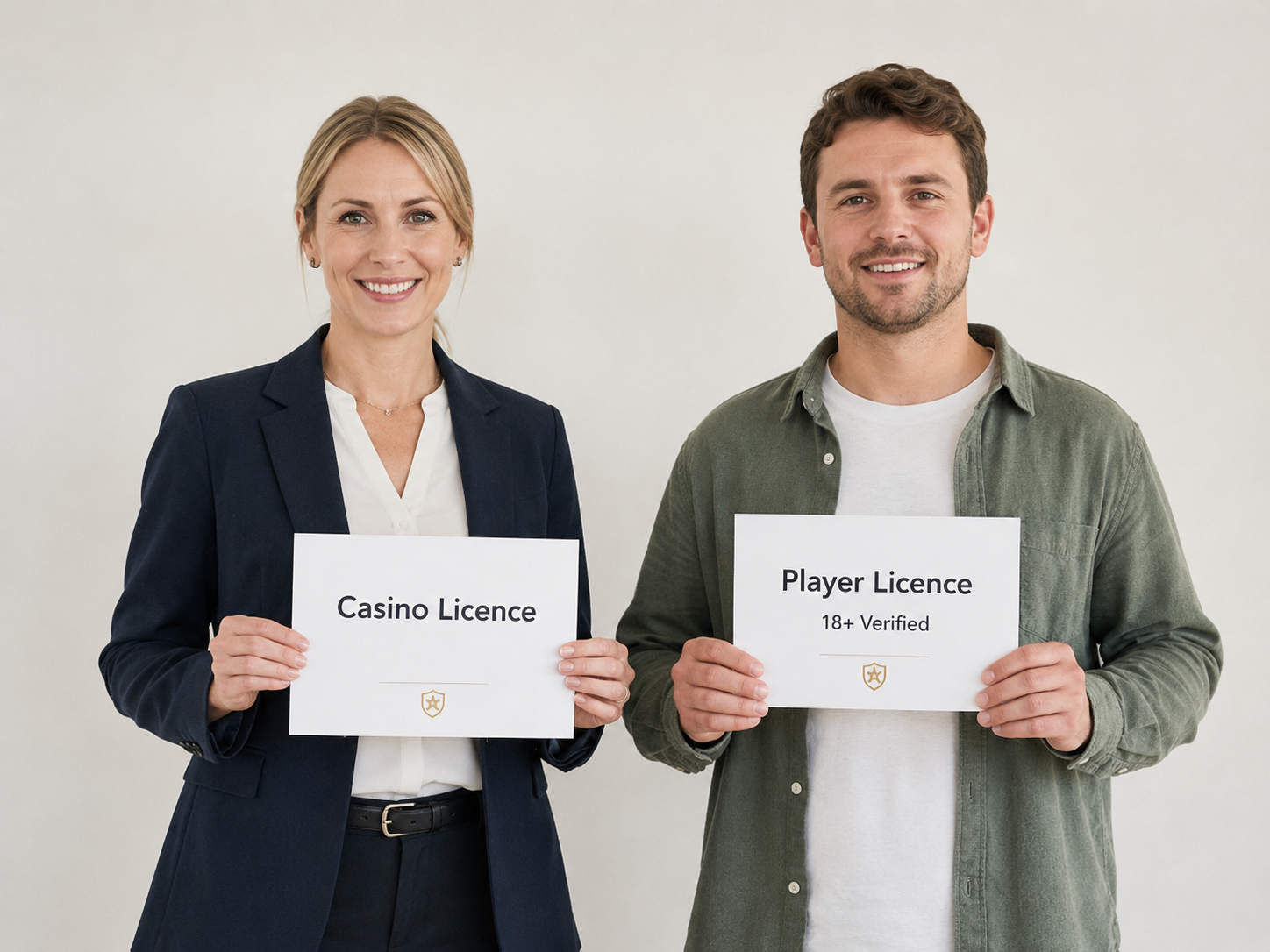
Before placing a single bet, you manage a verified digital player profile. This profile contains your age, your current exclusion status, and a national spending limit. Every licensed casino or sportsbook accesses these same permissions. Switching to a new operator no longer resets the clock on your spending. Increasing a limit requires clear evidence that you can afford the change.
This concept suggests that the casino holds a gambling license, but the player holds one too. While this exact system does not exist in the Netherlands today, the building blocks are appearing. We are moving away from account-based rules and toward a model where protection follows the individual across the entire regulated market.
The Dutch government recently highlighted plans for an overarching deposit limit across all online providers. This plan includes affordability assessments for those who wish to increase their spending. Combined with the Central Register for Exclusion from Gambling (Cruks), these steps bring the industry closer to a decentralized protection model. It raises a major question for the industry: could the next phase of regulation define specific permissions for every individual player?

Do Personal Gambling License Requirements Exist in the Netherlands?
Currently, players in the Netherlands do not need a personal gambling license. The legal requirement for a license rests entirely with the gambling provider. The Kansspelautoriteit (KSA) manages the Kansspelwijzer, which allows consumers to verify which websites have the legal authority to offer games of chance. Without a provider license, a site cannot legally operate within the Dutch borders.
Players instead interact with several protective controls. Licensed operators must monitor behavior and fulfill a strict duty of care. Existing rules use financial thresholds to identify potential excessive spending. For example, the KSA expects operators to perform affordability checks when players deposit above certain net monthly amounts. These limits are currently €300 for young adults and €700 for those aged 25 and older. Operators must ensure this financial information is correct and verifiable.
Cruks provides another layer of protection. Any player registered in this system cannot access Dutch licensed online sites or physical gaming halls. The minimum exclusion period lasts six months. These elements already form part of what an individual license might cover. They simply exist across separate systems at the moment.
Why the Individual Gambling Licence Suddenly Looks Less Futuristic
The primary weakness of the current account-based system is fragmentation. A player might reach a healthy deposit limit at one casino and simply open a new account at another. This “limit shopping” makes it difficult for any single operator to see the true extent of a player’s total gambling expenditure. The total amount spent across the market remains a mystery to individual compliance teams.
The Dutch government intends to close this gap. By proposing overarching deposit limits, they are changing the regulatory focus. The question used to be how much a person could deposit with a specific casino. Now, the question is how much that person should deposit across the entire legal industry. This shift creates a player-level regulatory profile.
This approach moves the responsibility from the individual account to a national standard. It ensures that protection remains consistent regardless of where a person chooses to play. This change is practical rather than purely theoretical, as the infrastructure for cross-operator communication continues to improve.
What Could Personal Gambling License Requirements Look Like?
A future individual license would likely function as a digital permission layer rather than a physical card. It would connect to a verified identity and provide real-time data to operators. This permission layer would confirm eligibility and ensure that all national safety standards are met before a deposit is accepted.
A potential framework for this model might include several core elements. Verified identity and age would confirm legal eligibility. The system would check Cruks status to block access during exclusion periods. A national deposit ceiling would limit total spending across all providers. It could also include an affordability status to determine if a player qualifies for higher limits based on their verified financial capacity.
Most of these components already exist in isolation. Operators verify customers, Cruks manages exclusions, and financial capacity is already a factor in responsible gambling. The only radical change is combining these into a single system that travels with the player. This would create a unified experience for the user while strengthening the regulatory net.
Decentralized Protection Does Not Have to Mean Blockchain
Decentralization in a regulatory context simply means that protection is not rebuilt from scratch by every new casino. It does not require complex new technologies. Instead, it relies on a shared, trusted system that operators can query. A casino would ask the system if a player is eligible and how much of their national deposit capacity remains for the month.
The operator might receive only a “yes” or “no” answer. They do not necessarily need to see the underlying bank statements or debt information. This distinction is vital for maintaining a professional standard of data protection. The KSA already uses a data minimization principle for Cruks, storing only the identification details needed to create a unique code.
A future personal license would need similar safeguards. A gambling regulator should not become a massive database of every citizen’s financial life. By using privacy tokens, the system could confirm permissions without exposing unnecessary personal details. This keeps the focus on safety without overstepping into total surveillance.
Would a Personal Licence Improve Player Protection?
The greatest advantage of a personal license is cross-operator visibility. Current controls focus heavily on what one company can see. This creates a dangerous blind spot. A person losing small amounts at four different casinos might be in financial trouble, but no single operator would see enough red flags to intervene. A player-level system removes this fragmentation.
This model also simplifies self-protection. Instead of managing different limits at several sites, a player sets one monthly budget that applies everywhere. This creates a practical technical backstop for personal accountability. It replaces a simple promise to stop with a verified system that prevents further deposits once a limit is reached.
The KSA strategy already emphasizes both the duty of care and consumer tools for self-protection. An individual license connects these two goals. It provides a more accurate picture of risk while giving players a single, powerful tool to manage their own behavior across the entire Dutch market.
But There Is a Serious Privacy Trade Off
Creating a centralized system involves significant privacy risks. To decide what a player can afford, the system needs access to sensitive data. This could include income, savings, or existing debts. Processing this level of information just to place a small bet feels intrusive to many consumers. It raises questions about who stores the data and how long they keep it.
Existing KSA guidance shows how complex affordability assessments are. Providers cannot rely on what a player claims. They must use verifiable information. Scaling this to a national level creates difficult administrative hurdles. What happens if a player loses their job? Could an automated risk score incorrectly block someone from a legal activity?
If designed poorly, a personal license could turn player protection into financial surveillance. This is not progress. The industry must find a way to verify capacity without compromising the fundamental right to privacy. Professional editorial standards and clear communication from regulators are needed to manage this tension.

The Illegal Market Creates Another Problem
Protection is only effective if players stay within the regulated system. The government recognizes that thousands of illegal websites remain active. These sites do not follow Dutch rules. If a player hits a national deposit limit on a licensed site, they face a choice. They can stop, or they can move to an offshore casino that promises “no limits.”
This decision point is where regulation often fails. If the rules are too strict, they drive players toward dangerous, unregulated environments. Channelization is just as important as protection. A system that is technically perfect but sends users to illegal sites does not actually protect anyone.
The goal is to keep players inside environments where protections apply. This requires a balanced approach. Limits should be high enough to allow for healthy recreation but low enough to prevent harm. Without this balance, an individual license could produce unintended consequences that harm the market.
Operator Responsibility Should Not Disappear
A centralized license system might lead some operators to believe that their work is done once a player is approved. This is a dangerous assumption. Affordability is not the same as safety. A high-earning player can still develop a gambling problem, regardless of their bank balance.
Duty of care must remain a constant priority. Behavior signals like chasing losses or spending too much time on a site are still critical red flags. These require human intervention and professional judgment. A personal license answers whether a person is permitted to play, but the operator must still ask how that person is playing.
The KSA stresses that financial capacity is only one part of the risk assessment. Behavioral monitoring remains essential. A future license should support the duty of care, not replace it. Responsibility for player safety must stay shared between the regulator, the player, and the provider.
Personal Gambling Licences Could Change the Entire B2B Market
For those in the B2B space, this shift would be significant. Payment providers and compliance tech companies would need to adapt to new technical infrastructure. Registration could become much faster if players use portable, verified credentials. Compliance teams might spend less time reviewing individual bank statements if a central system handles the verification.
Identity providers would become central to the industry’s infrastructure. Standardizing affordability checks would create a more level playing field for operators of all sizes. It would also give regulators better data on market-wide behavior, allowing for more precise policy decisions.
Discussing these requirements now is important. The Netherlands is moving in this direction, even if we are not there yet. Preparing for a future where player permissions are portable is a sensible move for any business operating in the Dutch iGaming sector.
The Individual License Model: Sensible Future or Regulatory Overkill?
Calling this model “government permission to gamble” makes it sound extreme. However, when viewed as a combination of verified identity and a national spending cap, it looks like a logical progression of current rules. The 2026 proposals for overarching limits suggest we are moving toward player-level protection.
A well-implemented model would stop limit shopping and simplify controls for the user. It would provide clear boundaries. A poorly implemented model would collect too much data and push players toward illegal sites. Finding the right balance is the most important task for the coming years.
This debate is essential for the future of the Dutch iGaming market. As a Dutch iGaming Content Writer and AI-Assisted Editor, I provide research-led analysis on the intersections of regulation and technology. My work helps teams understand complex shifts like these through human editorial review and deep industry expertise.
If your team needs clear, professional content regarding Dutch gambling regulation or editorial support, you can explore my latest editorial insights or contact me for professional publishing support. Quality and trust remain the foundation of professional publishing in the age of AI. The next phase of regulation may soon require that the player’s permissions travel with them everywhere they go.