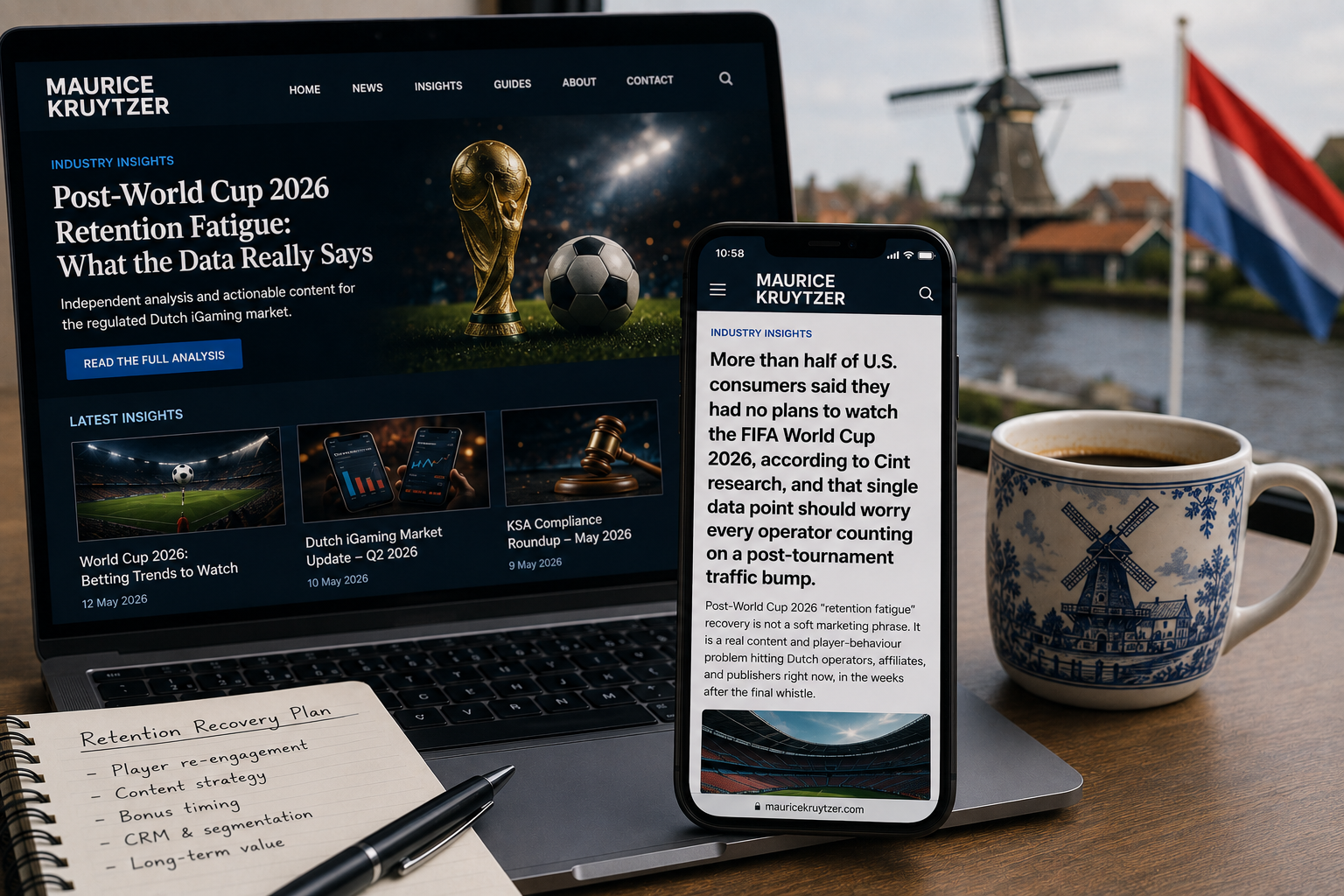
More than half of U.S. consumers said they had no plans to watch the FIFA World Cup 2026, according to Cint research, and that single data point should worry every operator counting on a post-tournament traffic bump. Post-World Cup 2026 “retention fatigue” recovery is not a soft marketing phrase. It is a real content and player-behaviour problem hitting Dutch operators, affiliates, and publishers right now, in the weeks after the final whistle.
I am Maurice Kruytzer, a Dutch SEO writer and Dutch content specialist with more than eight years building compliance-ready content for the regulated Dutch iGaming market. This is what I am telling clients this week.
Key Takeaways
- Retention fatigue is measurable. Betting handle, session length, and content engagement all dip in the four to eight weeks after a major tournament ends.
- Physiological fatigue data predicts market volatility. Player fatigue statistics from the tournament directly inform late-season betting content and micro-betting liquidity, covered in our micro-betting liquidity analysis.
- Compliance is the recovery lever, not a hurdle. KSA rules give operators a trust advantage during the post-tournament lull; see our 2026 KSA content compliance checklist.
- Localization keeps players when interest wanes. Native Dutch tone and iDEAL-specific messaging outperform generic re-engagement copy.
- AI workflows scale recovery content fast, but human-in-the-loop editing is what keeps it publication-ready.
- Advertising restrictions change the recovery playbook. Read our breakdown of the 2026 Dutch advertising bans.
- Retention fatigue recovery needs a content calendar, not a single campaign. One article will not fix a four-month engagement dip.
What Is Post-World Cup 2026 “Retention Fatigue” Recovery, Exactly?
Retention fatigue is what happens after the emotional peak of a tournament fades. Players who logged in daily during the World Cup stop opening the app three, four, five weeks later.
Post-World Cup 2026 retention fatigue recovery is the deliberate content and product strategy built to slow that drop-off. It is not about chasing the same excitement. It is about giving players a reason to stay once the novelty ends.
I structure this recovery work around three pillars: content freshness, compliance-driven trust, and localization. Miss any one of those and the recovery plan stalls before it starts.
Looking for a Dutch iGaming Content Partner?
Whether you need three articles a month or a dedicated content partner, I help operators, affiliates and agencies create high-quality Dutch iGaming content that is researched, human-edited and ready to publish.
Why Post-World Cup 2026 Retention Fatigue Hits the Dutch Market Differently
The Netherlands is not the U.S. market. Roughly 90% of Dutch online gamblers already play only on licensed platforms, which means the retention conversation here is not about acquisition. It is about keeping trust intact once the tournament content dries up.
Most agencies treat post-tournament content like any other seasonal dip. It isn’t. A regulated market punishes generic recovery campaigns and rewards operators who can prove continued editorial integrity after the hype fades.
This is exactly where a Dutch gambling content expert earns their fee: translating a global sports calendar into content that still respects KSA duty-of-care rules, even in the quiet months.
The Physiological Fatigue Data Behind the Content Strategy
Player fatigue during the tournament is not just a sports science footnote. It is actionable intelligence for anyone writing late-tournament betting content.
High-intensity running distances drop by roughly 20% in the final 15 minutes of a match. That end-game fatigue window is exactly where in-play betting markets swing hardest, and it is exactly where compliance-ready content needs to be sharpest, not laziest.

If your technical foundation is wrong, no amount of long-form fatigue analysis will save your late-tournament content. That’s why mobile-first architecture and clean data presentation come before the writing, not after.


Building an AI Workflows Pipeline for Post-World Cup 2026 Retention Fatigue Recovery
I do not hide the fact that I use AI. I lean into it, and I built a Dutch Assisted Editorial Team around it: Marieke handles compliance phrasing, Karol structures topical hubs, Tom drafts sports analysis, Gloria manages localization checks, Jop verifies KSA references, and Bobby runs technical formatting.
That structure is what makes a scalable publication pipeline possible during a retention fatigue window, when operators suddenly need fifteen fresh articles in three weeks instead of one every month.
AI workflows draft fast. Human editors decide what actually publishes. The difference between us and the content mills is human-in-the-loop oversight, applied consistently, not occasionally.
Fluff-free content during a fatigue window means fewer articles, written better, not more articles written worse.
Localization and Dutch Proofreading: Turning Fatigue Into Trust
Generic re-engagement copy translated word for word fails in the Netherlands. The text reads foreign. The compliance language is wrong. The trust evaporates.
A proper localization specialist adapts tone, iDEAL payment references, and responsible gambling messaging to Dutch norms, not just Dutch vocabulary. That is the difference between a Dutch translator and a Dutch editor who understands the regulatory context.
I structure topical hubs that answer the questions players actually ask once the tournament ends: which markets are still active, what bonuses remain valid, and how deposit limits work now that the excitement has cooled. See how this plays out in practice in our Dutch sports betting localization breakdown.


Compliance as the Recovery Weapon, Not a Hurdle
Compliance is now a ranking factor, not an afterthought. During a retention fatigue window, operators who slip on duty-of-care messaging get flagged first, precisely because engagement metrics are already soft and regulators watch those dips closely.
The 37.8% Dutch gambling tax rate makes margins tighter than ever in 2026, which means content teams cannot afford compliance mistakes that trigger fines on top of a natural engagement slump. Our 2026 fines analysis breaks down exactly where operators lose money on avoidable content errors.
Retention fatigue recovery content still needs to pass every KSA checkpoint: advertising targeting, 24+ accuracy, and Duty of Care language. Nothing about a slow season excuses shortcuts.
Micro-Betting Liquidity and the Retention Fatigue Problem
The Dutch government projected €108 million in extra tax revenue for 2025. It collected €2 million. That gap is a warning sign for anyone assuming tournament-driven volume will simply carry into the following quarters.
Micro-betting markets need constant, fast-moving stakes to stay liquid. When retention fatigue sets in and casual bettors disappear, thin margins get thinner, and capped deposits choke the volume these products depend on.
60% of players who competed in more than one match the week before the tournament experienced injury or underperformance. That same fixture-congestion logic applies to post-tournament betting markets: rushed, low-quality content during a fatigue window underperforms just as badly as an overplayed athlete.
Understand this dynamic first, then write around it. Our full financial impact breakdown shows exactly how tight these margins have become in 2026.
Who Needs a Post-World Cup 2026 Retention Fatigue Recovery Plan
This work is not a solo job. It takes a coordinated bench of specialists, and I have built my practice around exactly that mix:
- A Dutch SEO writer and Dutch content specialist who understands intent clusters, not just keywords
- An iGaming content writer and affiliate content expert who can pivot from World Cup coverage to domestic league betting without losing tone
- An AI content strategist who manages drafting speed without sacrificing accuracy
- A localization specialist and Dutch translator who catch the phrases that read foreign to a Dutch reader
- An SEO copywriter and content manager who keep the publication calendar realistic during a fatigue dip
- A Dutch gambling content expert, Dutch casino copywriter, Dutch crypto writer, and Dutch sportsbook writer, each covering their own vertical instead of one generalist stretched thin
- A Dutch editor who owns the final compliance pass before anything publishes
Whether you run internal affiliate marketing or outsource to a freelance writer, the roles above rarely fit inside one job description. That’s exactly why most in-house teams struggle to sustain quality once tournament momentum fades.
A Practical Recovery Checklist for the Weeks Ahead
Here is the fluff-free version of what I run for clients right now:
| Action | Why It Matters |
|---|---|
| Audit engagement drop-off by market segment | Identifies where retention fatigue is deepest, not just overall traffic loss |
| Refresh bonus and promotion pages | Stale promotions signal neglect right when trust is most fragile |
| Re-run KSA compliance checks | Regulators scrutinize quiet periods more, not less |
| Pivot content to domestic leagues and micro-markets | Fills the intent gap left by the tournament without forcing false hype |
| Re-localize responsible gambling messaging | Duty of Care content ages fast; outdated limits erode trust |
Heavy scripts, bloated images and clumsy pop-ups kill engagement before the content ever gets read, so pair this checklist with a technical review. See our fluff-free strategy playbook for the mobile-first foundation this all sits on.

North American hosting means unprecedented travel demands, directly impacting player fatigue and post-tournament market volatility.
Conclusion
Post-World Cup 2026 retention fatigue recovery is not solved by publishing more content. It is solved by publishing the right content, localized properly, and checked against KSA rules before it ever goes live.
I structure this work around SEO strategy, Dutch content operations, and human-verified editorial review because that combination is what actually holds attention once tournament hype fades. If your team is staring at a post-World Cup engagement dip right now, get in touch, and let’s build a recovery plan around real search intent instead of guesswork.
Frequently Asked Questions
What does “retention fatigue” mean after a major tournament like the World Cup?
Retention fatigue describes the drop in player engagement, session frequency, and betting activity that follows a major event once the emotional peak fades. Post-World Cup 2026 retention fatigue recovery focuses on rebuilding that engagement through targeted, compliant content rather than waiting for the next big event.
How long does post-World Cup retention fatigue typically last?
Based on tournament engagement patterns, most operators see the steepest drop-off between four and eight weeks after the final match. A proper recovery plan usually needs a sustained content push across that entire window, not a single campaign.
Why does the Dutch market need a different approach to retention fatigue recovery?
With around 90% of Dutch online gamblers using only licensed platforms, trust and compliance carry more weight than acquisition tactics. Post-World Cup 2026 retention fatigue recovery in the Netherlands has to work within KSA advertising and duty-of-care rules from day one.
Can AI-generated content help with retention fatigue recovery?
AI workflows can draft content quickly enough to cover a sudden content gap, but human review remains essential for compliance accuracy and natural Dutch phrasing. The strongest recovery content pairs AI drafting speed with human-in-the-loop editorial oversight.
What role does localization play in retention fatigue recovery?
Localization determines whether recovery content feels genuine to Dutch players or reads as a translated afterthought. A localization specialist adapting tone, iDEAL references, and responsible gambling language performs far better than generic re-engagement copy.
Is investing in a dedicated content strategy worth it during a slow post-tournament period?
Yes, because engagement dips are exactly when regulators and players notice neglect fastest. A structured post-World Cup 2026 retention fatigue recovery strategy protects both trust and revenue during the quietest stretch of the calendar.
How does micro-betting liquidity connect to retention fatigue?
Micro-betting products depend on constant stake volume, and when casual bettors disappear after a tournament, that liquidity dries up fast. Content teams need to understand this liquidity pressure to write betting content that reflects real market conditions instead of outdated tournament-era assumptions.