
Licensed vs. Unlicensed: The 2026 Cost-Risk Analysis starts with a number that should stop any operator mid-scroll: the average total cost of a data breach tied to a non-compliance factor now sits at $4.61 million. For Dutch iGaming businesses weighing a KSA license against an unregulated setup, that single figure reframes the entire decision.
We’ve spent more than eight years writing and editing content for the regulated Dutch gambling market as a Dutch content specialist, and the pattern rarely changes. Operators think licensing is the expensive route. In 2026, the data tells a different story, and any serious iGaming content writer or compliance manager needs to see the full picture before choosing a side.
Key Takeaways
| What You’re Comparing | Why It Matters in 2026 |
|---|---|
| Upfront cost vs. long-term exposure | Licensed operators pay fees and audit costs upfront. Unlicensed operators pay in fines, breach costs and lost trust later. |
| Cyber risk | Cyber incidents are the top global business risk for 2026, making licensed data-handling rules a genuine protective layer. |
| Signals of trust | Dutch players and partners now check for a valid KSA license before engaging, a lesson covered in our licensing mismatch case study. |
| Content and disclosure risk | Unlicensed brands often cut corners on bonus terms, which we break down in our guide to writing clear bonus terms. |
| AI adoption risk | AI jumped to the #2 global business risk in 2026, affecting licensed and unlicensed operators alike. |
| Compliance as an asset | Most C-suite leaders now treat compliance as a strategic enabler, not a cost centre. |
| Content quality | Dutch-market localization, translation and proofreading quality directly affect licensing applications and player trust. |
What “Licensed vs. Unlicensed” Means in the 2026 Dutch iGaming Market
A licensed operator holds a valid KSA permit and follows the Netherlands’ rules on advertising, player protection and reporting. An unlicensed operator serves Dutch players (or claims to) without that permit, often from a foreign jurisdiction.
This distinction matters more in 2026 than it did five years ago. Enforcement has tightened, and the KSA has become more visible in flagging unlicensed brands publicly. As a Dutch gambling content expert, we’ve seen how quickly a single enforcement notice can undo years of brand-building.
The 2026 Cost-Risk Analysis Framework: Licensed vs. Unlicensed Side by Side
Before comparing numbers, it helps to separate cost from risk. Cost is what you pay to operate. Risk is what you stand to lose if something goes wrong.
| Category | Licensed Operation | Unlicensed Operation |
|---|---|---|
| Setup cost | License fees, legal review, audits | Lower upfront, but no legal protection |
| Ongoing overhead | Compliance staff, reporting, insurance | Fines, blocked payments, takedown risk |
| Data security | Structured requirements, audits | Higher breach exposure, no oversight |
| Content operations | Editorial review, disclosure standards | Inconsistent terms, higher complaint rates |
| Brand longevity | Stable, partner-friendly | Vulnerable to sudden shutdown |
This is where Dutch content operations quietly become a cost line item that many operators underestimate. Building a defensible content strategy around licensing status is not optional anymore, it’s part of the risk equation.
Who the Licensed vs. Unlicensed: 2026 Cost-Risk Analysis Is Best For
This kind of comparison is not just for legal or compliance departments. It’s genuinely useful for anyone producing or managing content in this space.
- Dutch SEO writer teams who need to describe licensing status accurately without exaggerating claims
- Dutch content specialist roles responsible for keeping brand messaging consistent across markets
- iGaming content writer professionals drafting reviews, guides and bonus explainers
- Affiliate content expert teams deciding which operators are safe to promote
- AI content strategist roles building editorial workflows that stay compliant at scale
- Localization specialist and Dutch translator professionals adapting terms and conditions correctly
- SEO copywriter and content manager roles overseeing publication standards
- Dutch casino copywriter, Dutch crypto writer and Dutch sportsbook writer specialists working across verticals
- Dutch editor roles doing final compliance checks before publication
If your work touches any of these areas, understanding the cost-risk gap between licensed and unlicensed operators is not optional background knowledge. It shapes what you can safely write, publish and promote.
Best For Operators: The Real Cost of Skipping a KSA License
We reviewed a well-documented case involving a KSA logo displayed incorrectly on a casino site, which we cover in detail in our licensing mismatch analysis. Even a small labeling error triggered public scrutiny.
Now scale that to a fully unlicensed operation. The exposure isn’t just regulatory, it includes payment processing bans, advertising restrictions and permanent reputational damage with Dutch players.


Unlicensed operations trigger higher risk across every measured category.
Best For Compliance Teams: What Licensed Operators Actually Pay For
Licensing fees are only the visible part of the bill. The bigger ongoing cost is the audit cycle, staff training and documentation that keeps a license active.
Secureframe reports that 58% of organizations conducted four or more audits in 2025, a workload that unlicensed operators simply skip. That gap explains why some Dutch gambling content expert teams still avoid full licensing, even knowing the downside risk.

That shift is worth repeating for anyone still treating a license as pure overhead. Content manager and Dutch proofreading teams working under a licensed structure often move faster in the long run, because compliant terms rarely need to be rewritten under pressure.
Best For Content and Editorial Teams: Trust, Localization and Risk
Unlicensed brands frequently struggle with basic disclosure quality. Bonus terms get copied loosely between markets, and localization gets rushed.
A skilled localization specialist or Dutch translator catches these problems before publication. Poor translation of wagering requirements or withdrawal rules creates complaints, and complaints attract regulatory attention faster than almost anything else.

We recommend reviewing how localization is actually handled for Dutch betting products, a topic we cover thoroughly in our breakdown of Dutch sports betting localization.
Best For AI-Assisted Workflows: Managing the 2026 Risk Landscape
Artificial intelligence jumped from the #10 global business risk in 2025 to #2 in 2026, according to Allianz Commercial. That statistic alone should give any AI content strategist pause before automating compliance-sensitive content.
AI workflows are useful for drafting and structuring content faster, but they don’t replace human review. We use AI workflows to support editorial efficiency, never to skip the compliance check that a Dutch editor still needs to perform.
AI can draft a bonus explainer in seconds. It cannot verify whether that bonus is legal to advertise in the Netherlands. That still takes a human who understands the rules.

Case Study: What VBet and KSA Warnings Teach Publishers About Licensed vs. Unlicensed Risk
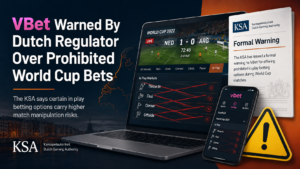
Public warnings involving VBet and the KSA gave Dutch publishers a clear look at what happens when licensing status becomes a public issue. Affiliate sites that had promoted the brand had to react quickly to protect their own credibility.
This is exactly the scenario an affiliate content expert plans for in advance. Affiliate marketing built on unlicensed partners carries reputational risk that spreads beyond the operator itself.